
electronics-journal.com
29
'26
Written on Modified on
Optimizing Plastic Machining for Semiconductor Equipment
By integrating specialized lightweight milling tools from MAPAL, M-O-T Mikro- und Oberflächentechnik GmbH internalized component fabrication to eliminate critical supply chain defects.
mapal.com
©MAPAL
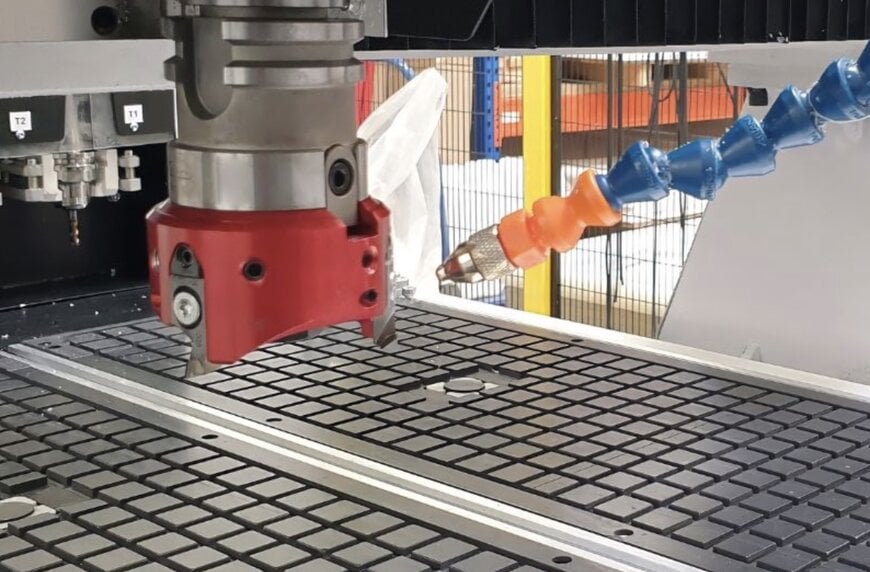
Custom machine manufacturer M-O-T partnered with tooling supplier MAPAL to implement specialized fly-cutting technology for fabricating wet chemical process systems. The integration of these diamond-tipped cutters enables the high-surface-quality machining of industrial plastics, ensuring leak-free chemical storage in semiconductor cleanroom environments.
Operational Challenges in Semiconductor Equipment Production
M-O-T constructs modular systems for the microsystem and semiconductor sectors, primarily utilizing thermally welded plastic sheets to build process cells and storage tanks for acids, bases, and solvents. Depending on chemical resistance and thermal requirements, the company utilizes polypropylene (PP), polyvinyl chloride (PVC), polyether ether ketone (PEEK), polyvinylidene fluoride (PVDF), and polytetrafluoroethylene (PTFE). Historically, the company relied on external suppliers for these machined plastic components. However, recurring quality issues, specifically leakages in finished chemical systems, forced the manufacturer to internalize production to maintain strict quality control. Simultaneously, market demand required the company to scale its output from five systems per year in 2021 to up to thirty systems annually.
Technical Constraints and Milling Requirements
Bringing production in-house required overcoming specific manufacturing constraints. The company operates a T-Rex open-frame milling machine equipped with an SK30 tool interface and a vacuum clamping table measuring 1,000 by 1,000 millimeters. To achieve secure thermal welds on the plastic tanks, the machined surfaces required an exceptionally high finish quality. Finding a milling tool capable of delivering this finish on varied plastics proved difficult. Additionally, the semiconductor industry's strict cleanliness standards prohibit the use of standard oil-based cooling lubricants, which could alter pH values or contaminate process parameters. The facility relies on rapidly evaporating isopropanol or water-based coolants, complicating heat management during the milling process.
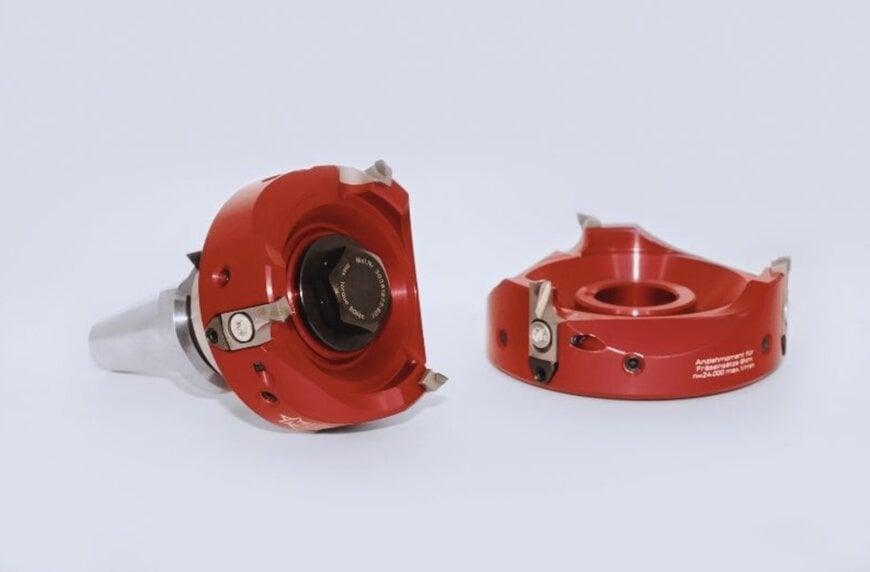
The NeoMill-Diamond-FlyCutter with three PCD-tipped milling cartridges was specifically developed for unstable machining conditions and small connections. ©MAPAL
Integrating Specialized Cutting Technology
The engineering team identified a viable tooling solution at the AMB 2024 trade fair in Stuttgart, collaborating with MAPAL to deploy the NeoMill-Diamond-FlyCutter. Originally engineered for face-machining aluminum in the electronics industry, this lightweight, triple-edged milling cutter features a specific cutting geometry that lowers cutting pressure and accelerates chip removal. The low cutting pressure makes the 63-millimeter diameter tool highly compatible with the facility's low-power spindle and vacuum clamping setup. MAPAL application engineers assisted in adapting the tool's cutting material to handle the distinct properties of industrial plastics rather than metals. A complementary polycrystalline diamond (PCD) end milling cutter was also integrated for lateral machining and contour finishing.
Process Optimization and Thermal Management
Deploying the new tooling required precise adjustments to machining parameters to manage thermal accumulation. Plastics present unique thermal challenges compared to metals, requiring careful feed and speed calibration. Robin Kollmann, responsible for milling operations at M-O-T, noted the technical hurdle: “Plastics absorb less heat than aluminium. This means that the heat cannot be dissipated from the component rapidly enough. As a result, chips may fuse or clump together, which builds up more pressure and might potentially damage the cutting edge.”
To mitigate thermal buildup and protect the PCD cutting edges, especially when machining rigid and brittle materials like PVDF, the machine operates at a conservative cutting speed of 6,000 revolutions per minute with a feed rate of 1,200 millimeters per minute. The process removes 0.3 millimeters per cut, accommodating stock allowances up to one millimeter.
Quantifiable Results and Production Scaling
This tooling integration allowed the manufacturer to successfully transition from exclusively machining enclosure doors to fabricating complete chemical storage tanks in-house, entirely eliminating the leakage defects associated with external suppliers. Following the success of the initial setup, the facility tested and ordered a 100-millimeter version of the milling head to increase surface coverage per pass. Because the tooling system utilizes a modular milling arbor that supports diameters from 63 to 160 millimeters, the facility can scale its cutting size to further increase productivity without requiring additional machine interface modifications.
Edited by Aishwarya Mambet, Induportals Editor, with AI assistance.
www.mapal.com
Custom machine manufacturer M-O-T partnered with tooling supplier MAPAL to implement specialized fly-cutting technology for fabricating wet chemical process systems. The integration of these diamond-tipped cutters enables the high-surface-quality machining of industrial plastics, ensuring leak-free chemical storage in semiconductor cleanroom environments.
Operational Challenges in Semiconductor Equipment Production
M-O-T constructs modular systems for the microsystem and semiconductor sectors, primarily utilizing thermally welded plastic sheets to build process cells and storage tanks for acids, bases, and solvents. Depending on chemical resistance and thermal requirements, the company utilizes polypropylene (PP), polyvinyl chloride (PVC), polyether ether ketone (PEEK), polyvinylidene fluoride (PVDF), and polytetrafluoroethylene (PTFE). Historically, the company relied on external suppliers for these machined plastic components. However, recurring quality issues, specifically leakages in finished chemical systems, forced the manufacturer to internalize production to maintain strict quality control. Simultaneously, market demand required the company to scale its output from five systems per year in 2021 to up to thirty systems annually.
Technical Constraints and Milling Requirements
Bringing production in-house required overcoming specific manufacturing constraints. The company operates a T-Rex open-frame milling machine equipped with an SK30 tool interface and a vacuum clamping table measuring 1,000 by 1,000 millimeters. To achieve secure thermal welds on the plastic tanks, the machined surfaces required an exceptionally high finish quality. Finding a milling tool capable of delivering this finish on varied plastics proved difficult. Additionally, the semiconductor industry's strict cleanliness standards prohibit the use of standard oil-based cooling lubricants, which could alter pH values or contaminate process parameters. The facility relies on rapidly evaporating isopropanol or water-based coolants, complicating heat management during the milling process.
The NeoMill-Diamond-FlyCutter with three PCD-tipped milling cartridges was specifically developed for unstable machining conditions and small connections. ©MAPAL
Integrating Specialized Cutting Technology
The engineering team identified a viable tooling solution at the AMB 2024 trade fair in Stuttgart, collaborating with MAPAL to deploy the NeoMill-Diamond-FlyCutter. Originally engineered for face-machining aluminum in the electronics industry, this lightweight, triple-edged milling cutter features a specific cutting geometry that lowers cutting pressure and accelerates chip removal. The low cutting pressure makes the 63-millimeter diameter tool highly compatible with the facility's low-power spindle and vacuum clamping setup. MAPAL application engineers assisted in adapting the tool's cutting material to handle the distinct properties of industrial plastics rather than metals. A complementary polycrystalline diamond (PCD) end milling cutter was also integrated for lateral machining and contour finishing.
Process Optimization and Thermal Management
Deploying the new tooling required precise adjustments to machining parameters to manage thermal accumulation. Plastics present unique thermal challenges compared to metals, requiring careful feed and speed calibration. Robin Kollmann, responsible for milling operations at M-O-T, noted the technical hurdle: “Plastics absorb less heat than aluminium. This means that the heat cannot be dissipated from the component rapidly enough. As a result, chips may fuse or clump together, which builds up more pressure and might potentially damage the cutting edge.”
To mitigate thermal buildup and protect the PCD cutting edges, especially when machining rigid and brittle materials like PVDF, the machine operates at a conservative cutting speed of 6,000 revolutions per minute with a feed rate of 1,200 millimeters per minute. The process removes 0.3 millimeters per cut, accommodating stock allowances up to one millimeter.
Quantifiable Results and Production Scaling
This tooling integration allowed the manufacturer to successfully transition from exclusively machining enclosure doors to fabricating complete chemical storage tanks in-house, entirely eliminating the leakage defects associated with external suppliers. Following the success of the initial setup, the facility tested and ordered a 100-millimeter version of the milling head to increase surface coverage per pass. Because the tooling system utilizes a modular milling arbor that supports diameters from 63 to 160 millimeters, the facility can scale its cutting size to further increase productivity without requiring additional machine interface modifications.
Edited by Aishwarya Mambet, Induportals Editor, with AI assistance.
www.mapal.com
