
The 5G RedCap Connects IoT Devices at Lower Cost
5G RedCap mobile communication technology aims to better meet the requirements of industrial and connected applications by offering greater energy efficiency while remaining compatible with existing 5G networks.

The 5G RedCap standard (for Reduced Capability) was finalised in 3GPP Release 17 to provide device manufacturers with a natural migration path between 4G LTE mobile communication technologies and 5G. Intended for mid-tier performance equipment, this technology targets applications whose throughput requirements sit between those of enhanced mobile broadband (eMBB) and those of low-power wide-area (LPWA) networks. It therefore meets the specific needs of many IoT devices.
In practice, it is a 5G communication technology developed for IoT use cases that do not require the full capabilities of 5G. Until now, connected devices generally relied on 4G, LTE-M, or NB-IoT technologies. 5G RedCap offers a more energy-efficient and cost-effective alternative.
According to ABI Research, shipments of RedCap-compatible IoT modules are expected to reach nearly 80 million units between 2024 and 2029, reflecting rapid adoption of the standard.
A streamlined 5G for IoT
“5G RedCap technology brings a series of optimisations at both device and network level. It logically succeeds LTE Cat-4 and Cat-6 technologies and makes 5G more accessible to manufacturers of connected objects that do not need the full capabilities of 5G,” explains Jonathan Budd, analyst at ABI Research.
Concretely, 5G RedCap technology delivers LTE-comparable throughput while ensuring future-proofing on 5G infrastructures. It therefore allows manufacturers to transition gradually to the new network generation without a complete redesign of their products.
Semiconductor manufacturers such as Qualcomm, MediaTek, Semtech and ASR Microelectronics have already launched or announced integrated circuits compliant with 5G RedCap requirements, confirming growing market interest.
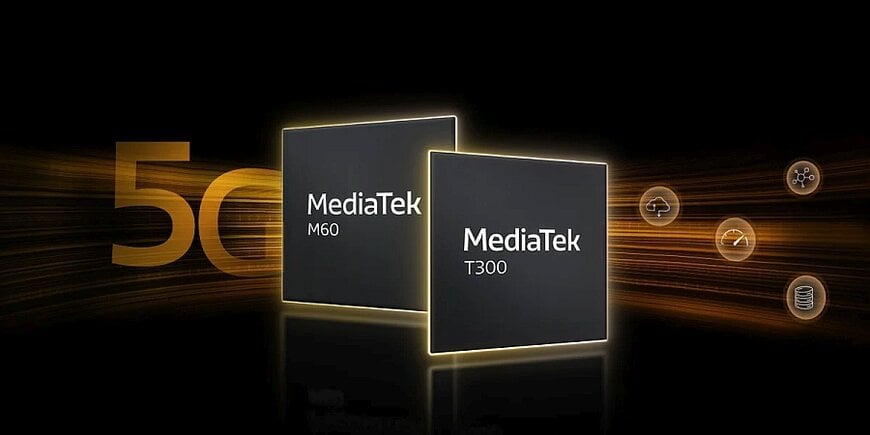
Based on the M60 modem IP, MediaTek’s T300-series RF system-on-chip is designed to support 5G RedCap communication technology. It integrates a single-core Arm Cortex-A35 processor and supports downlink speeds of up to 227 Mbit/s and uplink speeds up to 122 Mbit/s.
Towards an evolution: eRedCap
The next evolution of the standard, called eRedCap (Enhanced RedCap), will go even further. It aims to reduce device complexity and cost to address manufacturers currently using LTE Cat-1 and Cat-1bis technologies, which are widely deployed in industrial IoT and consumer connected objects.
ABI Research anticipates that 71% of RedCap modules shipped between 2024 and 2029 will come from this new eRedCap generation—56 million units—compared with 23 million for the current RedCap version (R17).
IoT chip specialist Sequans has already confirmed development of an eRedCap circuit, and other suppliers are expected to follow in what is set to become a highly competitive market. “As a replacement for LTE Cat-1 and Cat-1bis, eRedCap will offer a broadly applicable solution for connecting a new generation of IoT devices,” says Jonathan Budd.
