
Overview of Silicon Carbide (SiC) Electronic Components and Modules Announced in the First Half of 2026
The launches of silicon carbide (SiC) electronic components and modules documented during the first half of 2026 confirm the growing adoption of this wide-bandgap semiconductor.
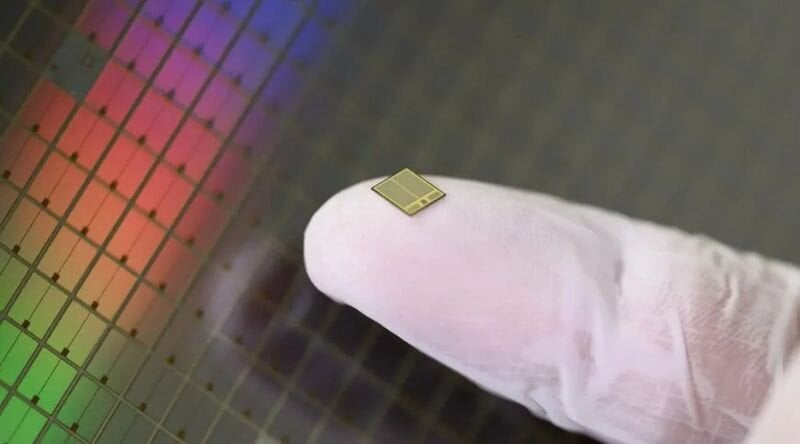
Announcements published by several designers (Infineon, Bosch, Rohm, Microchip, Allegro MicroSystems and Toshiba) highlight developments focused on increasing power density, reducing thermal losses and simplifying power conversion architectures.
Industrial Applications and Benefits of Silicon Carbide
Silicon carbide components are progressively replacing traditional silicon in environments where voltage, temperature and switching-frequency constraints are high. Industrial sectors leverage its physical properties across three main areas:
• Renewable Energy and Energy Storage: Photovoltaic and wind-power installations, as well as battery energy storage systems, are evolving towards 1500 V DC-link architectures or 800 V high-voltage DC architectures. SiC devices can withstand high nominal voltages (up to 2300 V) while keeping switching losses below 0.7% of output power.
• Electric Mobility: Integrated at the heart of traction inverters, onboard chargers (OBCs), DC-DC converters and EV charging stations, these components can operate at junction temperatures of up to 175°C. Higher switching frequencies reduce the volume and weight of peripheral passive components such as inductors and capacitors, resulting in valuable space savings within vehicles.
• Digital Infrastructure and Robotics: Power supplies for data servers and AI-focused data centres, uninterruptible power supplies (UPS), aerospace systems (eVTOLs) and industrial servo drives use SiC technology to increase volumetric power density, reaching, for example, 300 kW/L on evaluation platforms.
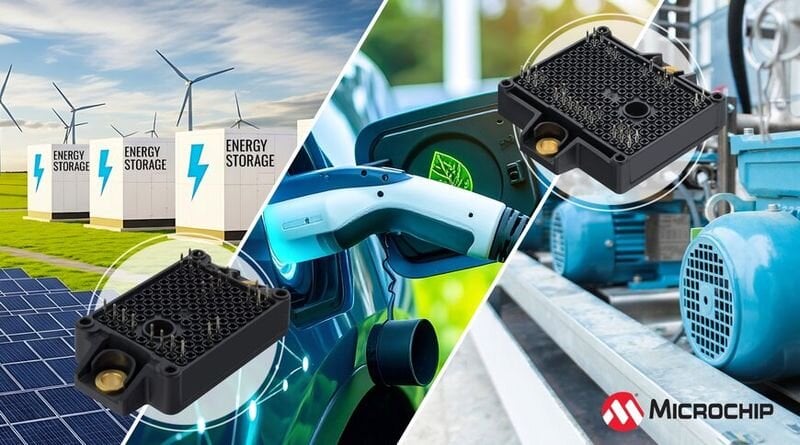
Technical Characteristics of the Announced Components
The following table summarises the specifications and functions of the various solutions introduced to the market during the first half of 2026:
| Manufacturer | Solution Type | Key Electrical Characteristics | Technological and Integration Features |
|---|---|---|---|
| Infineon Technologies | XHP 2 Power Modules (CoolSiC) | 2300 V voltage rating, 1 to 2 mΩ Rds(on), 4 to 6 kV isolation | .XT interconnection technology for thermal cycling, symmetrical switching behaviour enabling parallel operation. |
| Bosch (distributed by Rutronik) | Third-Generation SiC Chips and MOSFETs | Automotive qualification (manufactured on 200 mm wafers) | Vertical-structure architecture achieved through an adapted chemical etching process. Dimensions reduced by 20%. |
| Rohm Semiconductor | EcoSiC™ MOSFET Series (5th Generation) | 30% reduction in Rds(on) at a junction temperature of 175°C | Available as bare dies and discrete modules. Three-phase reference boards supplied for applications up to 300 kW. |
| Microchip Technology | BZPACK mSiC® Power Modules | Integration of MB and MC MOSFET families, CTI rating of 600 V | Baseplate-free package, press-fit pins, validated through HV-H3TRB humidity-bias testing (>1000 h). |
| Allegro MicroSystems | Power-Thru™ Isolated Gate Drivers | Adjustable gate voltages (15 V, 18 V, 20 V), regulated negative voltage | Single channel for simultaneous power and signal transfer. Eliminates the need for an external bias supply. |
| Toshiba | 1200 V SiC MOSFET (TW007D120E Series) | 1200 V rating, typical Rds(on) of 7.0 mΩ, drain current (ID) of 172 A, Qgd charge of 33 nC | Trench-gate structure reducing Rds(on)A by 58% compared with the third generation. QDPAK package designed for top-side cooling. Vgs-on drive voltage from 15 V to 18 V. |
Key Technical Trends Shaping the SiC Ecosystem in 2026
A cross-analysis of these products reveals four common technological trends shaping the evolution of power components in 2026:
1. Reducing Integration Complexity
The transition to silicon carbide generally imposes strict requirements on peripheral circuit design due to high switching speeds. To address this, manufacturers now provide complete ecosystems: gate drivers incorporating their own isolation barrier (Allegro), system-level simulation tools (Rohm Solution Simulator) and ready-to-evaluate reference boards for three-phase inverters. At the same time, components such as Toshiba’s MOSFET integrate standardised gate-drive voltages (15 V to 18 V), making them easier to incorporate into existing control topologies.
2. Optimisation of Thermal and Mechanical Interfaces
Reducing conduction losses involves not only internal chip improvements (lower Rds(on) at high temperature or trench-gate architectures that improve the figure of merit, as seen at Toshiba) but also package design. The 2026 generation of modules widely adopts factory-applied thermal interface materials (TIMs) to ensure uniform heat transfer to heatsinks, uses aluminium nitride (AlN) substrates and eliminates baseplates to reduce module thickness. The emergence of dedicated surface-mount packages such as Toshiba’s QDPAK introduces a top-side cooling approach that transfers heat directly to a heatsink or liquid-cooled plate without thermally stressing the PCB.
3. The Pursuit of Compatibility and Multi-Sourcing
To secure industrial supply chains, components increasingly follow a modular approach. Gate-driver circuits support multiple gate-voltage levels, enabling the control of SiC transistors from different suppliers without modifying PCB routing. Likewise, module footprints and interchangeable pin configurations are becoming standardised.
4. Stricter Reliability Qualification Criteria
In response to the requirements of automotive and heavy-industrial sectors, including data centres and photovoltaic infrastructures, resistance to humid and high-voltage environments has become a standard validation criterion. Power modules are now qualified beyond regulatory thresholds, notably through extended high-voltage, high-temperature reverse-bias humidity testing (HV-H3TRB) lasting more than 1,000 hours, ensuring no premature chip degradation in the presence of condensation.
Published by Youssef Belgnaoui, editor for Induportals.
