
Ultra-low-voltage wireless SoC for compact medical wearables
Rutronik introduces a new Nordic Semiconductor SoC that enables miniaturized healthcare and sensing devices through low-voltage operation, high efficiency and integrated security features.
www.rutronik.com
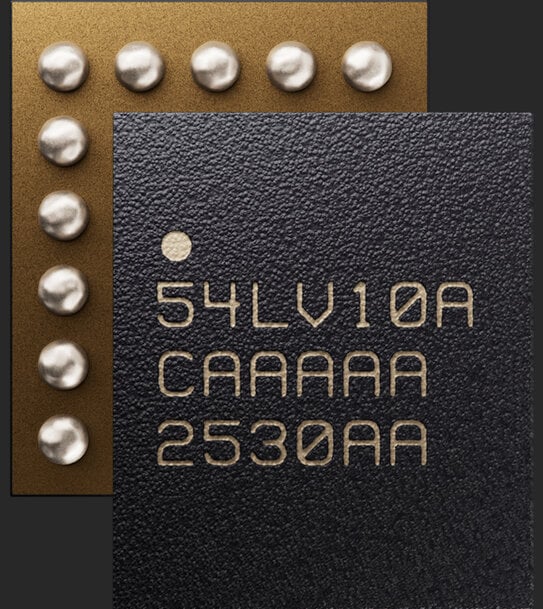
How a low-voltage SoC supports next-generation medical and wearable devices
Developers of continuous glucose monitors, biosensors and compact healthcare wearables often search for wireless system-on-chip solutions that combine long battery life, small size and reliable connectivity. The nRF54LV10A, added to the Rutronik portfolio through an early access program, addresses this requirement with an architecture optimized for low-voltage operation and advanced sensing workloads. Its supply range of 1.2 to 1.7 volts allows direct use of silver-oxide button cells without external regulation, reducing system complexity and enabling extended operating life even in extremely compact form factors.
Ultra-compact architecture designed for low-power medical applications
The device operates in a hibernation state below 50 nA and integrates a global real-time clock in system-off mode, which supports the long standby periods required in medical wearables and connected-health monitoring solutions. The chip-scale package of 1.93 × 2.29 mm provides a footprint suitable for miniaturized devices with multi-year service life.
Low-voltage GPIOs allow direct interfacing to sensors and microcontrollers without level shifters, further reducing board space and improving reliability in tightly integrated electronics. These characteristics make the system suitable for low-voltage sensor nodes, fitness trackers and compact IoT designs that require continuous sensing with minimal energy consumption.
Processing and radio capabilities for demanding real-time workloads
At the core of the SoC is a 128 MHz Arm Cortex-M33 processor paired with a 128 MHz RISC-V coprocessor, enabling parallel execution of wireless protocols and signal processing tasks. The integration of 1 MB of non-volatile memory and 192 KB of RAM supports real-time applications in medical monitoring, including high-resolution sensing, data filtering and secure device communication.
The multi-protocol 2.4 GHz radio subsystem supports Bluetooth Low Energy, channel sounding for distance estimation and proprietary 2.4 GHz protocols with rates up to 4 Mbps. These capabilities are suited for latency-sensitive biosensor platforms and low-power wearable devices that require consistent, short-range wireless performance.
Integrated security features for healthcare-grade protection
Medical devices demand robust protection mechanisms to safeguard data integrity and device authenticity. The SoC integrates secure boot, secure firmware update, cryptographic acceleration, tamper detection and a TrustZone-based trusted execution environment. These features help ensure a secure runtime foundation for connected healthcare devices, which commonly transmit sensitive physiological data.
A differentiated SoC for compact, long-life medical wearables
Compared to conventional wireless SoCs that require higher supply voltages or external regulators, the nRF54LV10A differentiates itself by combining ultra-low-voltage operation, high processing capability and a compact CSP package. The architecture enables manufacturers to design smaller, long-lasting medical wearables with fewer external components and reduced energy consumption. With samples and development kits available through Rutronik’s early access program, the SoC supports the development of new biosensors, CGMs, wellness trackers and compact IoT healthcare systems requiring efficient wireless connectivity and advanced security.
www.rutronik.com
