
electronics-journal.com
12
'26
Written on Modified on
Transition to Lead-Free SMT Spacers for Compliance and Assembly Efficiency
Würth Elektronik has restructured its SMT spacer portfolio to lead-free alloys, ensuring long-term compliance with RoHS environmental standards and expanding automated pick-and-place options for manufacturers.
www.we-online.com
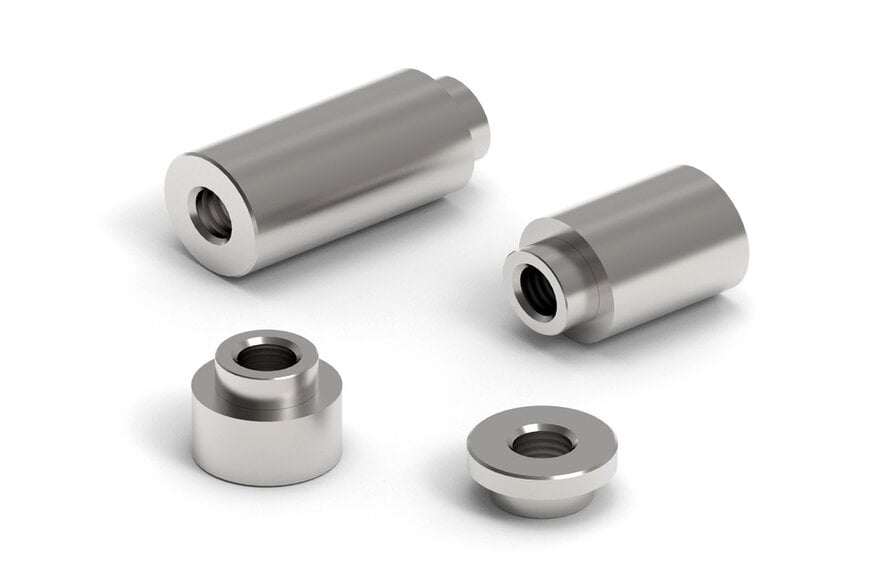
Würth Elektronik has transitioned its surface-mount technology (SMT) spacer series to lead-free materials to provide electronic manufacturers with regulatory certainty ahead of shifting environmental directives. These mechanical components facilitate multi-level printed circuit board (PCB) architectures, housing attachments, and the mounting of displays and sensors across various industrial and automotive applications.
Lead-Free Compliance and Regulatory Deadlines
The restructuring of the SMT spacer portfolio is a strategic response to the upcoming expiration of RoHS (Restriction of Hazardous Substances) exemptions scheduled for the end of June 2027. By utilizing lead-free alloys, the components maintain a lead content of less than 0.1 percent, adhering to European Directives 2011/65/EU and 2015/863/EU.
This transition affects several core product families:
- WA-SMSI: Spacers featuring internal threads.
- WA-SMST: Components designed for push-through systems.
- WA-SMSR: Solutions for reverse-side PCB spacing.
- WA-SMSSR: Specialized spacers utilizing matched expansion rivets.
For technical readers, this material change ensures that the automotive data ecosystem and industrial digital supply chain remain uninterrupted by hardware obsolescence. Integrated lead-free spacers remove the requirement for late-stage redesigns or new certifications once the current RoHS exemptions expire.
Technical Performance and Material Stability
The lead-free spacers are finished with a tin surface layer, engineered to maintain integrity during high-temperature processing. Testing confirms that the surface characteristics—including color, adhesion, and structural density—remain stable through multiple reflow soldering cycles.
The mechanical reliability of these components is a result of the specific interplay between solder pad geometry, paste volume, and the tin thickness of the alloy. This combination produces high holding forces and resistance to torque, which is essential for mechanically stressed PCBs or support structures in rugged environments.
Optimized Assembly and Automated Handling
Beyond material changes, the update introduces new assembly aid variants to streamline production workflows. Previously limited to a polyimide film with a pull-tab (designated "R"), the range now includes two additional configurations:
Technical Performance and Material Stability
The lead-free spacers are finished with a tin surface layer, engineered to maintain integrity during high-temperature processing. Testing confirms that the surface characteristics—including color, adhesion, and structural density—remain stable through multiple reflow soldering cycles.
The mechanical reliability of these components is a result of the specific interplay between solder pad geometry, paste volume, and the tin thickness of the alloy. This combination produces high holding forces and resistance to torque, which is essential for mechanically stressed PCBs or support structures in rugged environments.
Optimized Assembly and Automated Handling
Beyond material changes, the update introduces new assembly aid variants to streamline production workflows. Previously limited to a polyimide film with a pull-tab (designated "R"), the range now includes two additional configurations:
- RR Variant: A circular film without a removal tab. This design is intended for dense PCB layouts where a protruding tab might interfere with the automated optical inspection (AOI) of neighboring small-scale components.
- RX Variant: Designed specifically for high-volume manufacturing within a digital supply chain, this version is supplied without any protective film. The "RX" geometry allows specialized pick-and-place nozzles to grip and position the spacer directly. This eliminates the manual or mechanical step of film removal and reduces material waste in mass production environments.
Application Areas
The spacers are utilized as support structures for large-format circuit boards and as secure mounting points for functional modules. Common technical use cases include the precise positioning of LEDs at a specific height relative to a housing aperture and the integration of sensors that require defined air gaps for thermal management or signal clarity. These components are compatible with standard lead-free solder pastes, allowing them to be integrated into existing SMT production lines without modifying thermal profiles.
www.we-online.com
The spacers are utilized as support structures for large-format circuit boards and as secure mounting points for functional modules. Common technical use cases include the precise positioning of LEDs at a specific height relative to a housing aperture and the integration of sensors that require defined air gaps for thermal management or signal clarity. These components are compatible with standard lead-free solder pastes, allowing them to be integrated into existing SMT production lines without modifying thermal profiles.
www.we-online.com
