
electronics-journal.com
13
'26
Written on Modified on
Industrial Motherboard Platform for AI and Edge Expansion
Avalue Technology introduces an ATX motherboard supporting Intel Core processors and PCIe Gen5 expansion for scalable AI inference, industrial computing, and edge data processing.
www.avalue.com
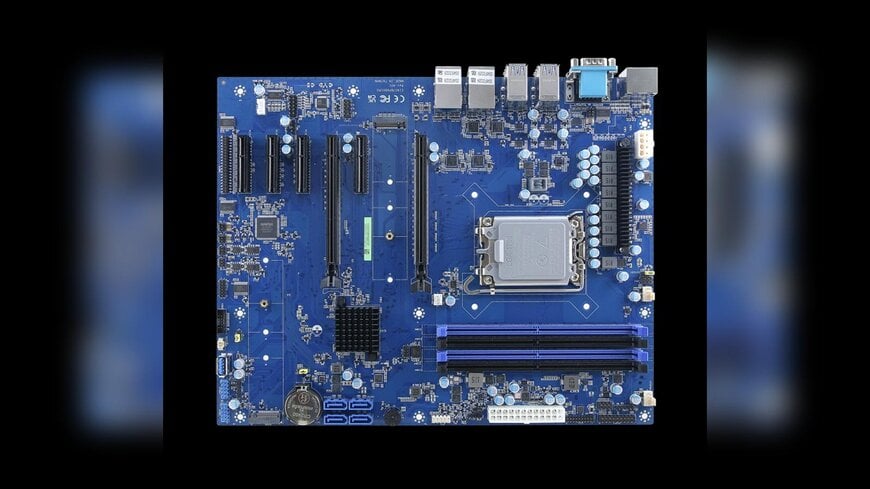
Avalue Technology has introduced the EAX-R680BP ATX industrial motherboard, a computing platform designed to support high-bandwidth expansion and processor scalability for AI inference, edge computing, and data-intensive workloads. Built around PCIe Gen5 connectivity and multi-generation Intel Core processor support, the platform targets system integrators developing flexible industrial and enterprise computing architectures.
Platform Architecture for AI and Edge Computing
Industrial and enterprise computing platforms increasingly require high-bandwidth expansion and accelerated processing to support AI inference, smart manufacturing systems, and data-driven industrial analytics. Edge environments in particular demand platforms that combine compute density with flexible I/O and long operational lifecycles.
The EAX-R680BP motherboard is designed around an ATX architecture that prioritizes expansion capacity and modular integration. The platform supports next-generation Intel Core Series 2 processors as well as Intel 12th, 13th, and 14th generation Core processors. This compatibility enables organizations to deploy updated processing hardware while maintaining continuity in existing system architectures.
Within an edge computing infrastructure, this multi-generation CPU support allows gradual system upgrades while preserving validated hardware configurations and minimizing redesign cycles.
PCIe Gen5 Expansion and GPU Acceleration
High-performance workloads such as AI inference and real-time data analytics often depend on accelerator cards and high-bandwidth interconnects. The motherboard incorporates PCIe Gen5 connectivity to support expansion cards requiring large data throughput.
The platform supports two primary expansion configurations:
- 1 × PCIe Gen5 x16 slot, optimized for a single high-bandwidth GPU or accelerator
- 2 × PCIe Gen5 x8 slots, enabling dual-card configurations for parallel workloads
This flexibility allows system architects to configure GPU-accelerated computing systems or integrate specialized hardware such as FPGA accelerators, high-speed networking cards, or storage controllers. PCIe Gen5 lanes also support high-performance storage and data acquisition modules required in industrial automation and AI-driven inspection systems.
Memory Capacity and Storage Architecture
Data-intensive applications, including machine-vision analytics and predictive maintenance models, require sufficient memory bandwidth and fast storage access.
The motherboard supports four DDR5 U-DIMM slots with a maximum capacity of 192 GB, enabling large in-memory datasets for analytics and inference workloads. DDR5 memory also improves bandwidth compared with previous DDR4 architectures, supporting higher data throughput between CPU and system memory.
For storage configurations, the platform integrates NVMe and SATA RAID support, allowing systems to balance performance and redundancy. NVMe storage supports high-speed data pipelines for AI workloads, while SATA RAID configurations enable stable archival storage or redundant industrial data logging.
This combination enables the motherboard to function in lightweight AI servers, industrial edge nodes, and compact data processing systems.
Industrial Connectivity and System Integration
Industrial computing platforms must interface with existing operational technology infrastructure, including programmable logic controllers (PLCs), sensors, and factory automation equipment.
The motherboard includes six PCIe expansion slots and fourteen USB interfaces, enabling integration of peripheral devices such as data acquisition cards, accelerator modules, and external storage.
For industrial environments, the platform provides built-in serial communication interfaces including RS-232 and switchable RS-232/422/485 ports. These interfaces allow direct connectivity with industrial control systems and legacy automation equipment commonly deployed in manufacturing environments.
Such connectivity simplifies system integration in smart manufacturing environments and supports reliable long-term deployment in industrial facilities.
Platform Compatibility and Lifecycle Stability
Enterprise and industrial system deployments typically require hardware platforms with long availability cycles and stable supply chains. Frequent platform transitions can introduce operational risks and require system redesign.
The motherboard is aligned with the Intel platform roadmap, enabling compatibility with multiple generations of Intel Core processors. This design allows enterprises to maintain a consistent system architecture while scaling processing performance over time.
For system integrators building industrial edge computing platforms, this compatibility reduces total cost of ownership by enabling incremental upgrades rather than full system replacements.
Computing Foundation for Scalable Industrial Systems=
The combination of PCIe Gen5 expansion, DDR5 memory capacity, and flexible storage configuration positions the EAX-R680BP motherboard as a scalable platform for industrial and enterprise deployments. Its ATX architecture provides the physical space and connectivity required for accelerator cards, high-speed storage, and specialized industrial interfaces.
By combining processor compatibility, expansion flexibility, and industrial communication interfaces, the platform supports applications including lightweight AI inference systems, compact enterprise servers, and industrial computing platforms requiring high expandability and long-term hardware availability.
Edited by an industrial journalist, Sucithra Mani — AI-powered.
www.avalue.com
Memory Capacity and Storage Architecture
Data-intensive applications, including machine-vision analytics and predictive maintenance models, require sufficient memory bandwidth and fast storage access.
The motherboard supports four DDR5 U-DIMM slots with a maximum capacity of 192 GB, enabling large in-memory datasets for analytics and inference workloads. DDR5 memory also improves bandwidth compared with previous DDR4 architectures, supporting higher data throughput between CPU and system memory.
For storage configurations, the platform integrates NVMe and SATA RAID support, allowing systems to balance performance and redundancy. NVMe storage supports high-speed data pipelines for AI workloads, while SATA RAID configurations enable stable archival storage or redundant industrial data logging.
This combination enables the motherboard to function in lightweight AI servers, industrial edge nodes, and compact data processing systems.
Industrial Connectivity and System Integration
Industrial computing platforms must interface with existing operational technology infrastructure, including programmable logic controllers (PLCs), sensors, and factory automation equipment.
The motherboard includes six PCIe expansion slots and fourteen USB interfaces, enabling integration of peripheral devices such as data acquisition cards, accelerator modules, and external storage.
For industrial environments, the platform provides built-in serial communication interfaces including RS-232 and switchable RS-232/422/485 ports. These interfaces allow direct connectivity with industrial control systems and legacy automation equipment commonly deployed in manufacturing environments.
Such connectivity simplifies system integration in smart manufacturing environments and supports reliable long-term deployment in industrial facilities.
Platform Compatibility and Lifecycle Stability
Enterprise and industrial system deployments typically require hardware platforms with long availability cycles and stable supply chains. Frequent platform transitions can introduce operational risks and require system redesign.
The motherboard is aligned with the Intel platform roadmap, enabling compatibility with multiple generations of Intel Core processors. This design allows enterprises to maintain a consistent system architecture while scaling processing performance over time.
For system integrators building industrial edge computing platforms, this compatibility reduces total cost of ownership by enabling incremental upgrades rather than full system replacements.
Computing Foundation for Scalable Industrial Systems=
The combination of PCIe Gen5 expansion, DDR5 memory capacity, and flexible storage configuration positions the EAX-R680BP motherboard as a scalable platform for industrial and enterprise deployments. Its ATX architecture provides the physical space and connectivity required for accelerator cards, high-speed storage, and specialized industrial interfaces.
By combining processor compatibility, expansion flexibility, and industrial communication interfaces, the platform supports applications including lightweight AI inference systems, compact enterprise servers, and industrial computing platforms requiring high expandability and long-term hardware availability.
Edited by an industrial journalist, Sucithra Mani — AI-powered.
www.avalue.com
