
electronics-journal.com
18
'26
Written on Modified on
Technical Interview on ScioSense UFC23 Front-End Ultrasonic Converter Architecture
Director Norbert Breyer discusses how the ScioSense UFC23 optimizes power and precision for high-resolution industrial water, heat, and gas metering applications.
www.sciosense.com
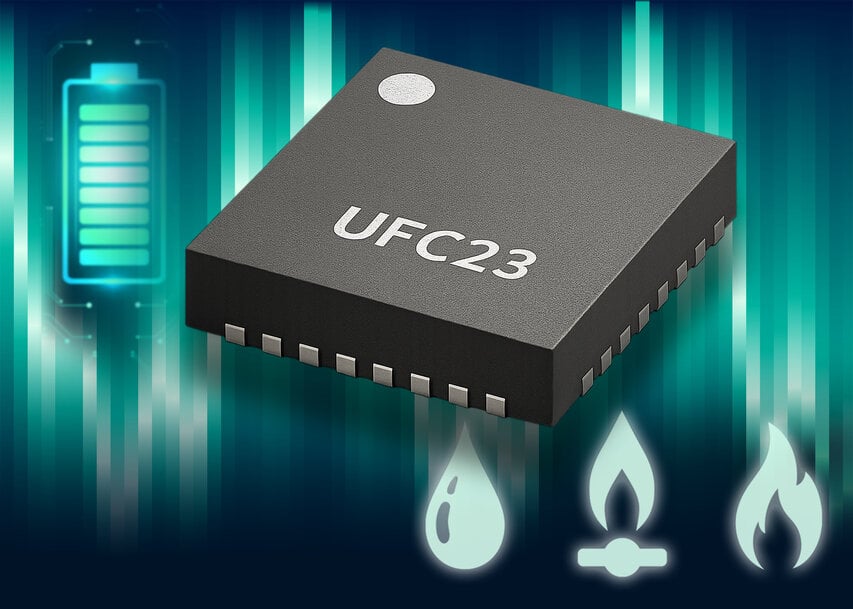
The industrial transition toward high-resolution metering requires a shift in hardware architecture. While previous integrated solutions combined processing and conversion, contemporary utility requirements for water meters reaching R1000 standards necessitate a pure front-end approach. The ScioSense UFC23 is designed without an on-chip CPU or memory, allowing engineers to utilize external microcontrollers for complex flow algorithms. This separation enables manufacturers to maintain proprietary control over their flow calculation intellectual property while leveraging the latest low-power microcontroller developments for processing.
Technical Advantages for OEM System Design
By removing the integrated CPU, the architecture eliminates the power overhead associated with on-chip processing, focusing entirely on measurement performance. Modern smart meters must function with equal precision in bidirectional flow environments, which increases algorithm complexity. The UFC23 provides the necessary measurement data, including multiple amplitude values and monitoring parameters, without forcing the use of fixed internal processing cycles. This flexibility allows OEMs to scale their designs based on the specific resolution and power requirements of their target utility network.
Precision Mechanics and Power Efficiency
The measurement system is built on time-to-digital converter technology, achieving a single-shot standard deviation of 35ps. Through filtering, the device maintains stability within a range of +/-7ps. This level of precision, combined with reduced offset temperature drift, supports the development of R1000 class meters. For battery-operated systems, the converter operates with a standby current below 1 µA and an active current of 6.6 µA at a 8Hz sampling rate. To further reduce power consumption, an integrated batch mode permits the collection of up to 12 measurements before activating the external controller, facilitating a field lifespan exceeding 15 years.
Enhanced Robustness and Signal Monitoring
Smart metering infrastructure face diverse operational challenges, particularly in water and gas environments where signal strength varies. The inclusion of programmable gain amplification and advanced signal monitoring allows the system to process weak receive signals throughout the lifecycle of the meter. High sampling rates are maintained to ensure rapid response to flow changes without depleting the battery. These technical features are critical for utility leak detection, where the ability to measure minimal flow rates directly impacts the reduction of non-revenue water.
Future Developments in Ultrasonic Sensing
The application of ultrasonic technology is expanding beyond primary utility meters into the sub-metering sector. This involves monitoring individual consumption points such as showers, toilets, and faucets within a single facility or apartment. The technical objective remains the identification of leakages and the provision of granular data for resource management. As infrastructure becomes more digitized, the demand for sensing components that offer high sensitivity and low energy footprints will continue to drive the adoption of specialized front-end converters.

About the Author
Norbert Breyer, a physicist and the Director of Product Management and Marketing for flow converters and sensor interfaces at ScioSense, who has nearly three decades of experience in the development of ultrasonic flow measurement systems.
Edited by an industrial journalist, Lekshman Ramdas, with AI assistance.
www.sciosense.com
