
electronics-journal.com
14
'26
Written on Modified on
Inductive Proximity Sensors for Aerospace Diagnostic Networks
Powell Electronics is supplying non-contact sensing components designed to provide continuous fault detection and target identification within aircraft avionics subsystems.
www.powell.com
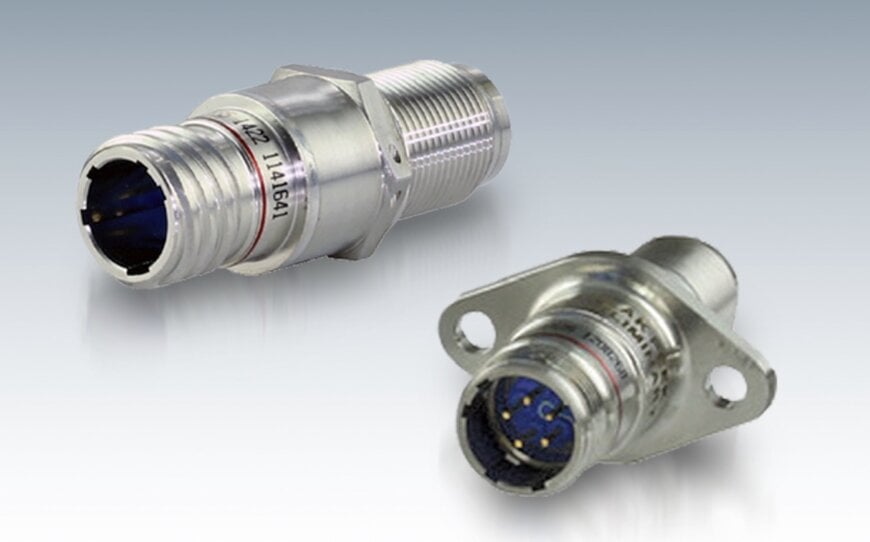
Honeywell has engineered the GAPS (General Aerospace Proximity Sensors) and HAPS (Harsh Application Proximity Sensors) series of hermetically sealed, non-contact devices to verify the presence or absence of mechanical targets across high-reliability aviation networks. Powell Electronics is distributing these sensor lines to support defense, aerospace, and industrial supply chains requiring ruggedized diagnostic hardware.
Integration of Eddy Current and Variable Current Technologies
The proximity sensors integrate into aerospace sensory networks by employing traditional Eddy Current Killed Oscillator (ECKO) principles combined with patented Fixed Amplitude Variable Current Oscillator (FAVCO) technology. This architectural design enables the hardware to provide binary on/off outputs alongside an optional integrated health monitoring signal directed to the host system. By utilizing an internal circuit to continuously evaluate component integrity, the devices output a distinct fault signal rather than returning false positive or false negative readings. This deterministic reporting mechanism allows aviation maintenance crews to precisely isolate sensor malfunctions, reducing diagnostic downtime and lifecycle maintenance costs.
Environmental Specifications and Kinetic Tolerance
Aerospace applications require hardware capable of withstanding extreme atmospheric fluctuations and mechanical stress. Both the general-purpose and harsh-environment variants operate within a thermal range of -55°C to +115°C, utilize a direct current supply voltage between 12 Vdc and 32 Vdc, and achieve a target response time of under 5 milliseconds. The primary differentiation between the two series involves their kinetic tolerance thresholds. The GAPS series sustains up to 20G of vibrational force, making it suitable for standard internal flight control surfaces. Conversely, the HAPS devices withstand up to 90G of vibration, enabling deployment in high-impact locations such as landing gear assemblies and external aerodynamic components.
Additional Context
This section details technical specifications and competitive benchmarking not included in the original news release.
Within the aerospace component market, inductive proximity sensors utilizing ECKO technology are standard for landing gear and flight control surface monitoring. Competitors such as Eaton and Crane Aerospace & Electronics manufacture comparable ruggedized, non-contact sensors designed for extreme vibration and temperature profiles. Standard ECKO sensors frequently struggle to differentiate between an absent target and an internal sensor failure, which can trigger ambiguous control system faults. The implementation of FAVCO-based continuous health monitoring allows the host logic controller to distinctively separate sensor degradation from target absence. Standard competitive benchmarks for these components focus on mean time between failures, shock and vibration resistance—frequently tested to RTCA DO-160 standards—and deterministic response times. At 90G vibration resistance and a sub-5 millisecond response time, the harsh application variant aligns with the upper tier of commercially available inductive sensing limits for severe-duty aircraft environments.
Edited by Aishwarya Mambet, Induportals Editor, with AI assistance.
www.powell-europe.com
