
electronics-journal.com
09
'26
Written on Modified on
Arrow Enables Remote Evaluation of NXP Ara240 Edge AI Accelerator
Digital Test Drive gives engineers hands-on access to AI workloads for computer vision, generative AI and multimodal edge applications before hardware investment.
www.arrow.com
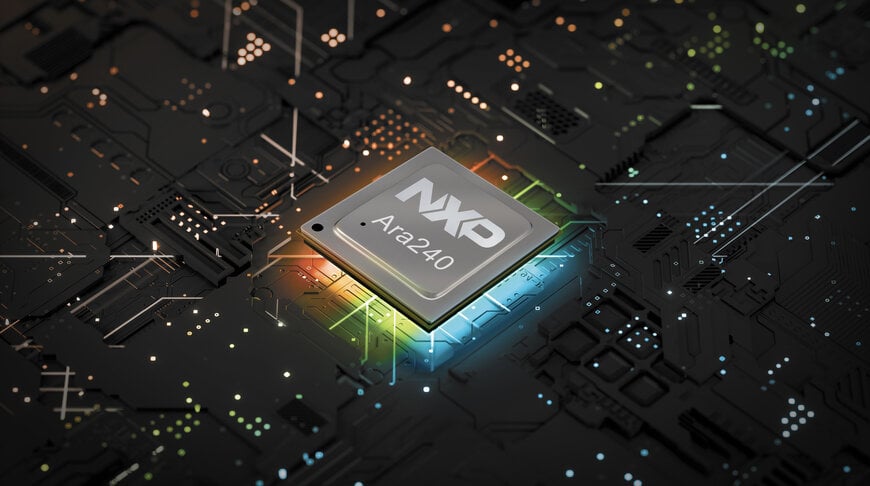
Arrow Electronics has introduced a remote hardware evaluation program for the NXP Semiconductors Ara240 discrete neural processing unit, utilizing its Digital Test Drive platform. This initiative targets engineers developing industrial automation, robotics, and intelligent vision systems by allowing them to test advanced edge artificial intelligence models on physical embedded boards via web access.
Edge Artificial Intelligence Hardware Accessibility
As the deployment of artificial intelligence shifts toward the edge for industrial and time-sensitive applications, developers require localized compute capabilities to reduce latency, improve data privacy, and minimize reliance on cloud processing. To address these architectural requirements, Arrow Electronics utilizes its Digital Test Drive platform to remove logistical bottlenecks such as hardware kit availability, shipping delays, and complex software installation. Engineers can remotely access live systems featuring NXP i.MX applications processors paired with the Ara240 accelerator, enabling the validation of real-world workloads prior to committing to specific hardware topologies.
Architectural Specifications and Performance Metrics
The NXP Ara240 discrete neural processing unit is engineered to deliver up to 40 equivalent tera operations per second (eTOPS). This throughput provides the computational bandwidth necessary for algorithms including large language models, vision language models, transformers, and convolutional neural networks. To support these memory-intensive workloads, the hardware incorporates up to 16 gigabytes of LPDDR4 memory. This dedicated memory architecture allows developers to run complex artificial intelligence models directly on embedded systems without creating resource contention with the primary host processor.
Application Scenarios and System Prototyping
By processing data locally, the technology specifically benefits machine vision and autonomous robotics applications where continuous cloud connectivity is either impractical or introduces unacceptable latency. The remote platform facilitates direct performance benchmarking for computer vision inference and vision language integration. Justin Mortimer, senior director of product marketing at NXP Semiconductors, noted that the platform provides a practical method for engineering teams to evaluate real-world edge artificial intelligence performance and finalize design decisions. Shelby Schnurrenberger, vice president of supplier management at Arrow Electronics, stated that integrating the accelerator into the remote environment allows engineers to execute workloads immediately, validating performance and exploring use cases to shorten the development cycle.
Additional Context:
This section details technical specifications and competitive benchmarking not included in the original product announcement
The NXP Ara240 discrete neural processing unit operates at a typical power consumption of 6.6 watts and connects to host systems via a PCIe Gen4 interface. Within the edge artificial intelligence accelerator market, it competes directly with platforms such as the Hailo-10H module. Both processors target localized generative artificial intelligence applications and deliver a peak performance metric of 40 tera operations per second. The Hailo-10H achieves this throughput with a lower typical power consumption of 2.5 watts. In contrast, the Ara240 architecture prioritizes high-bandwidth memory integration by incorporating up to 16 gigabytes of dedicated onboard LPDDR4 memory, which allows the module to store and execute large language models containing up to 30 billion parameters independently of the host system memory.
Edited by Natania Lyngdoh, Induportals editor, assisted by AI.
www.arrow.com
