
electronics-journal.com
29
'26
Written on Modified on
Advanced Electronic Enclosures with Active Thermal and Antenna Integration
BOPLA introduces modular packaging systems featuring transparent film heating and advanced cooling mechanisms for industrial Internet of Things applications.
www.bopla.de
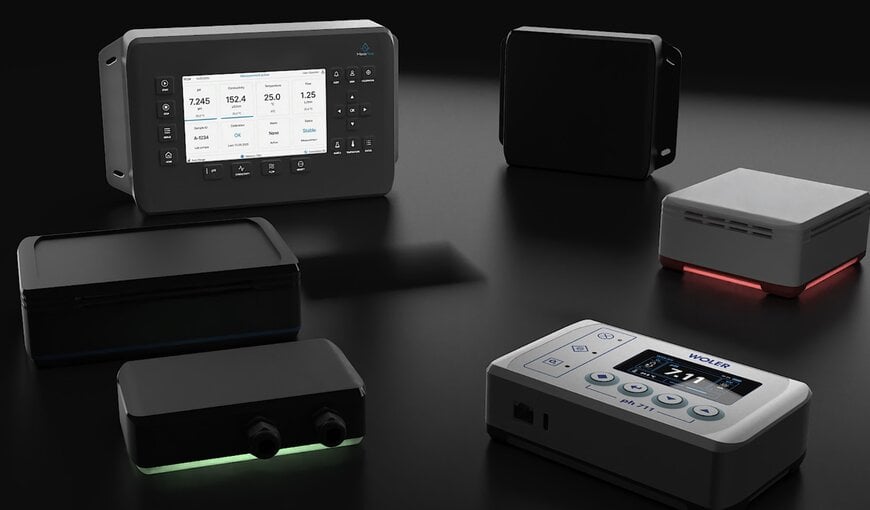
BOPLA is releasing its new BoNext and BoVersa enclosure systems alongside printed electronic components designed for embedded applications and outdoor sensor infrastructure. These technologies address the strict industrial requirement for electronic packaging that combines physical environmental protection with active heat dissipation and integrated communication capabilities.
Structural Protection and Polycarbonate Packaging
The technologies will be presented at the electronica trade fair, taking place from November 10 to 13, 2026, in Munich. Among the primary systems is the BoNext enclosure, engineered specifically for sensitive electronics. The housing utilizes flame-retardant, self-extinguishing polycarbonate that complies with UL 94 V-0 safety standards. The structural design provides inherent protection against dust and water ingress, with upgrade pathways available to achieve IP68 certification for demanding environmental applications.
Scalable Thermal Management for Embedded Systems
Addressing the thermal challenges of high-performance electronics, the BoVersa system utilizes a modular architecture combining plastic and aluminum components. The aluminum bases are manufactured with a point-symmetrical cooling-fin design, establishing an efficient thermal management mechanism for passive heat dissipation. This localized cooling is necessary for continuous operation in wireless communication hardware, industrial Internet of Things devices, and embedded computing systems.
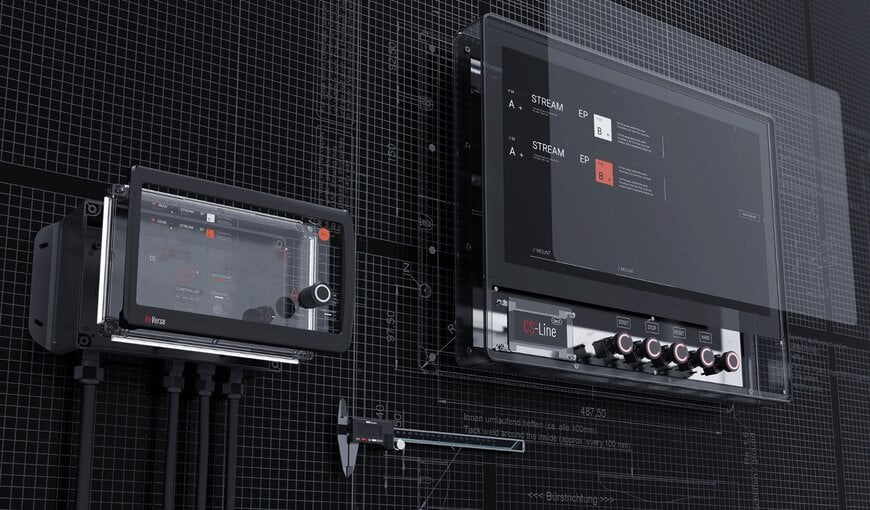
The BoVersa enclosures achieve IP66 and IP68 ingress protection ratings, alongside an IK08 impact resistance classification. The system is scalable across six sizes and can be deployed in handheld, desktop, wall-mounted, or mast-mounted configurations. Transparent or translucent functional covers allow for the integration of custom lighting, displays, and external control elements.
Metal-Mesh Printed Electronics for Sensor Integration
To maintain operational reliability for optical systems deployed outdoors, the release includes transparent film heaters and antennas based on fine metal-mesh technology. Ice and condensation routinely disrupt the functionality of cameras, LiDAR, and radar. By printing highly conductive metal structures onto transparent carrier films, the resulting heating elements provide targeted, uniform temperature distribution across critical optical surfaces.
These film heaters can reach maximum outputs of 3,000 W/m² and sustain temperatures up to 85°C while maintaining optical transparency of up to 93%. Manufactured in sizes up to 250 × 430 mm, the films can be laminated into enclosures with integrated displays. Additionally, the same metal-mesh printing technique is used to produce flat, flexible, and virtually invisible antennas. These support near-field communication (NFC), transparent RFID, Wi-Fi, and high-frequency 5G/6G arrays. The conductive mesh also functions as an electromagnetic shield, providing up to 60 dB of attenuation while allowing approximately 80% light transmission.
Joint Exhibition and Hazardous Area Solutions
In conjunction with the standard and thermal enclosure systems, ROSE Systemtechnik GmbH is exhibiting at the joint booth (Hall B3, Stand 161). The partner company expands the available portfolio by presenting heavy-duty Ex enclosures for hazardous environments, newly engineered stainless-steel flange systems, and specialized industrial human-machine interface components.
Additional Context
This section details technical specifications and competitive benchmarking not included in the original news release.
In the industrial enclosure market, polycarbonate systems meeting UL 94 V-0 standards face direct competition from manufacturers like Fibox, whose ARCA and MNX polycarbonate series establish the benchmark for NEMA 4X and IP-rated ingress protection in harsh environments. For thermal management and electromagnetic compatibility, BOPLA's aluminum BoVersa system competes closely with the nVent SCHROFF IP-Pro Alu EMC series. While BoVersa utilizes a point-symmetrical cooling-fin architecture for passive heat dissipation, nVent utilizes heavy-duty die-cast aluminum that provides IP67 protection, IK09 impact resistance, and integrated EMC shielding effective from 30 MHz to 4 GHz.
Regarding transparent heating elements for LiDAR and optical sensors, BOPLA's metal-mesh technology competes against Carbon Nanotube (CNT) film heaters developed by Canatu, as well as metamaterial meshes like Skymesh. While traditional Indium Tin Oxide (ITO) coatings provide excellent optical clarity, they lack mechanical flexibility. Both metal-mesh and CNT solutions overcome this limitation by offering high 3D stretchability for complex geometries and superior power densities—such as BOPLA's 3,000 W/m² metric—making them structurally optimal for automotive sensor de-icing and seamless antenna integration.
Edited by Aishwarya Mambet, Induportals Editor, with AI assistance.
www.bopla.com
