
electronics-journal.com
09
'25
Written on Modified on
Melexis Advances Privacy-Safe Detection for Smart Buildings
A new FIR-based algorithm enhances people detection, enabling accurate occupancy insight and energy-efficient building control without relying on conventional camera systems.
www.melexis.com
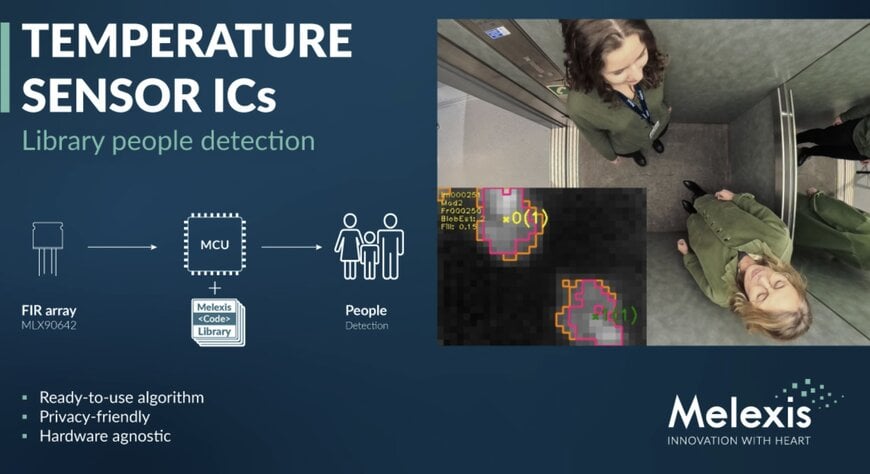
People detection, counting, and indoor localization are increasingly required in smart-building environments such as offices, meeting rooms, co-working floors, or elevator cabins. These applications depend on accurate occupancy data to support energy optimisation, space usage analysis, and automation routines. To support these needs while preserving user privacy, Melexis has introduced a new people-detection algorithm designed for its MLX90642 far-infrared (FIR) 32×24 thermal array.
A Privacy-Preserving Alternative to Vision Cameras
FIR thermal sensing provides stable detection even in complete darkness while avoiding the identifiable imagery associated with traditional cameras. This makes it suitable for sensitive indoor spaces where privacy and low-power operation matter. The Melexis algorithm is tailored for ceiling-mounted installations operating in compact environments and is intended to simplify the integration of FIR-based occupancy monitoring into next-generation smart-building systems.
Hardware-Agnostic Design and Streamlined Integration
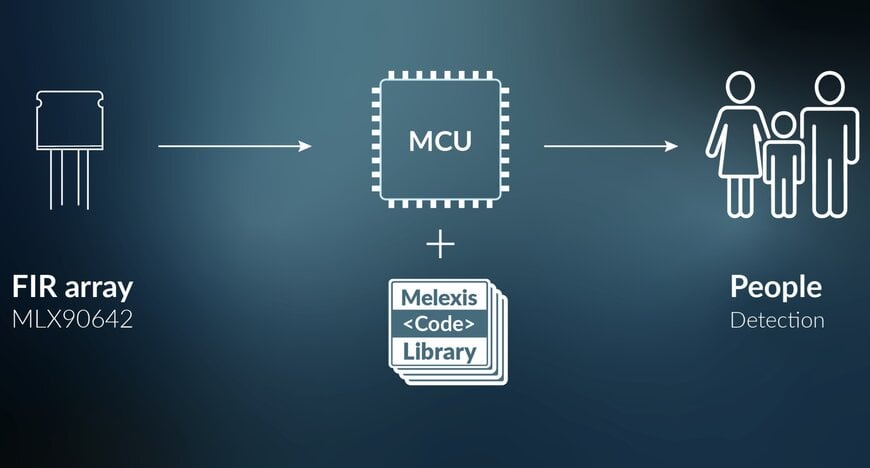
The precompiled library supports multiple commonly used microcontroller families. Its hardware-agnostic structure and modest memory requirements allow engineers to evaluate and deploy it without being tied to a specific MCU. By focusing on constrained environments—such as elevator ceilings or small office rooms—the algorithm delivers predictable performance using the MLX90642 sensor’s low-noise characteristics and wide operating range.
Validated Logic-Based Approach Instead of AI Models
The algorithm uses a deterministic, logic-based method developed from Melexis’ in-house FIR imaging expertise. It does not rely on retraining cycles or AI-driven thermal models, reducing variability across environments. This approach ensures consistent behaviour across temperature ranges and indoor layouts, as long as the sensor is mounted within its specified field-of-view and thermal limits.
Faster Development Through Ready-to-Use Tools
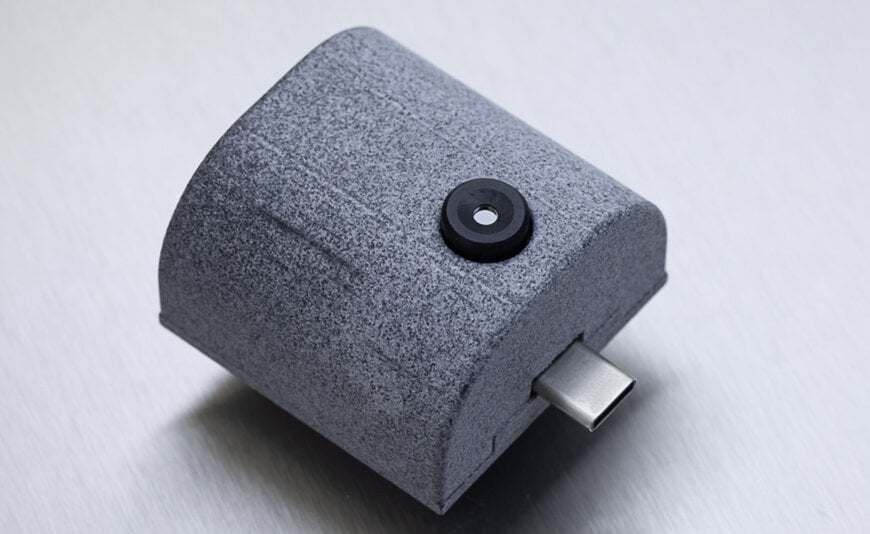
Once implemented, the algorithm interprets the thermal array data to identify people within the sensor’s field of view and outputs occupancy information that can directly support smart-building decisions. Melexis has also released a dedicated evaluation kit combining the MLX90642 with firmware preloaded with the detection algorithm. This turnkey setup enables engineers to test performance immediately, adjust parameters, and validate feasibility before committing to system-level design work.
www.melexis.com
