
electronics-journal.com
16
'26
Written on Modified on
PHYTEC releases lens CAD data for embedded vision design
Free STEP models with visualized field of view help engineers select and integrate S-mount optics for board-level cameras in industrial imaging systems.
www.phytec.com
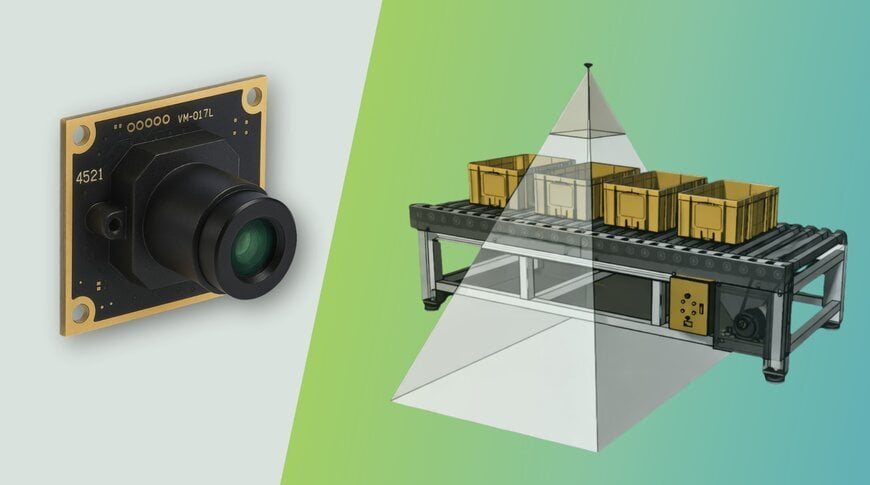
PHYTEC is now providing free 3D models, including the field of view, for its board-level camera modules and numerous lenses.
Mechanical integration and optical validation are frequent bottlenecks in embedded vision projects, especially when industrial devices require tight installation envelopes and predictable imaging coverage. In this context, PHYTEC has published STEP CAD files for more than 20 S-mount lenses, matched to its board-level cameras and including a visualized field of view.
STEP lens models bring optics into the mechanical design workflow
PHYTEC is making 3D STEP files available for more than 20 S-mount lenses designed to be used with PHYTEC board-level cameras. The CAD models are intended to simplify early-stage selection and mechanical integration of camera-lens combinations by allowing design teams to place the camera modules and lenses directly into CAD assemblies.
A key technical element of the dataset is the inclusion of a visualized field of view (FOV) for each lens, adapted to PHYTEC camera modules. This supports faster validation of whether a given optics package matches the target installation scenario and coverage requirements before prototype builds begin.
Field of view visualization helps validate working range and object distance
Alongside geometry, the STEP data includes FOV visualization to support system-level review of camera placement and expected capture area. PHYTEC also integrates indicators for regular working range and minimum object distance, with these parameters color-coded in the 3D model.
This approach is designed to reduce effort during optical component selection by helping engineers confirm that a chosen lens meets practical constraints such as minimum distance to the object and expected operating range—factors that often trigger rework late in development if not checked early.
Faster camera-lens selection for industrial product integration
By combining STEP geometry with lens-specific FOV data, the models are aimed at cutting down the time needed to evaluate optics options for embedded imaging systems. The company positions the files as a way to accelerate the design phase by reducing trial-and-error and enabling earlier approvals of camera-lens combinations within the broader product assembly. The STEP files are available as a free download from PHYTEC’s website.
Development kits bundle camera modules, lenses, and Linux vision software
PHYTEC also offers embedded imaging kits to support camera and optics integration at the prototype stage. These kits are available for multiple processor platforms, including NXP i.MX 95, NXP i.MX 93, and the NXP i.MX 8M Plus series, as well as processor families from Texas Instruments and STMicroelectronics.
The kits can be configured with a selectable camera module and lens, and ship with V4L2 camera drivers and vision libraries included in a pre-installed Linux operating system. This enables teams to evaluate camera performance while also testing processor features relevant to imaging pipelines, including NPUs and ISPs, without building the full software stack from scratch—supporting faster embedded vision bring-up.
Services extend from integration support to ISP calibration
Beyond hardware and software kits, PHYTEC offers services linked to embedded vision development, including consulting on camera and optics selection, support for design and integration, development assistance, software adjustments, and specialist work such as ISP calibration for specific camera-lens combinations.
Camera assembly and calibration handled at the Mainz site
PHYTEC manufactures its electronics, including its own cameras, at its facility in Mainz, Germany. The company notes that the site includes dust-protected workspaces for assembling cameras with optics and filters.
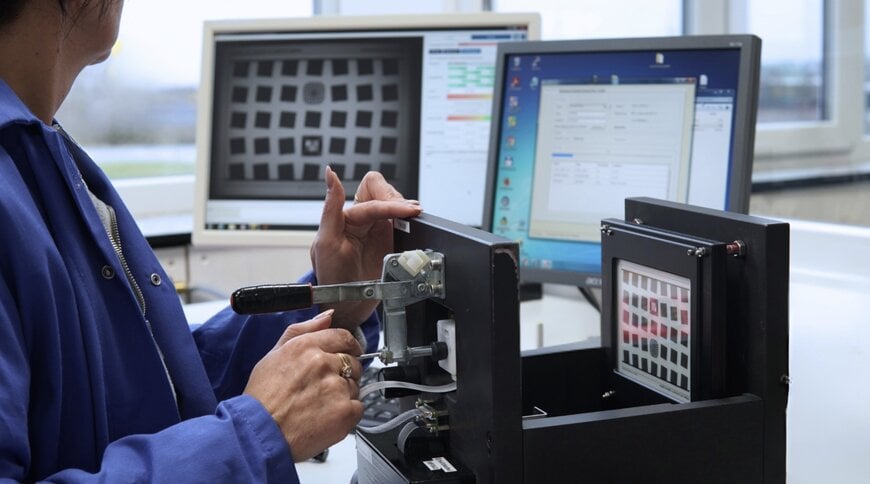
In a dedicated dust-protected workspace, PHYTEC handles the assembly, adjustment, and calibration of optics for custom series products.
This setup is intended to support the delivery of custom optics for volume products as fully assembled, adjusted, and calibrated units. PHYTEC frames the production approach as a single-supplier model for embedded vision programs—covering camera electronics, optics integration, and calibration—aimed at maintaining production efficiency and delivery reliability across the product lifecycle.
www.phytec.com
Mechanical integration and optical validation are frequent bottlenecks in embedded vision projects, especially when industrial devices require tight installation envelopes and predictable imaging coverage. In this context, PHYTEC has published STEP CAD files for more than 20 S-mount lenses, matched to its board-level cameras and including a visualized field of view.
STEP lens models bring optics into the mechanical design workflow
PHYTEC is making 3D STEP files available for more than 20 S-mount lenses designed to be used with PHYTEC board-level cameras. The CAD models are intended to simplify early-stage selection and mechanical integration of camera-lens combinations by allowing design teams to place the camera modules and lenses directly into CAD assemblies.
A key technical element of the dataset is the inclusion of a visualized field of view (FOV) for each lens, adapted to PHYTEC camera modules. This supports faster validation of whether a given optics package matches the target installation scenario and coverage requirements before prototype builds begin.
Field of view visualization helps validate working range and object distance
Alongside geometry, the STEP data includes FOV visualization to support system-level review of camera placement and expected capture area. PHYTEC also integrates indicators for regular working range and minimum object distance, with these parameters color-coded in the 3D model.
This approach is designed to reduce effort during optical component selection by helping engineers confirm that a chosen lens meets practical constraints such as minimum distance to the object and expected operating range—factors that often trigger rework late in development if not checked early.
Faster camera-lens selection for industrial product integration
By combining STEP geometry with lens-specific FOV data, the models are aimed at cutting down the time needed to evaluate optics options for embedded imaging systems. The company positions the files as a way to accelerate the design phase by reducing trial-and-error and enabling earlier approvals of camera-lens combinations within the broader product assembly. The STEP files are available as a free download from PHYTEC’s website.
Development kits bundle camera modules, lenses, and Linux vision software
PHYTEC also offers embedded imaging kits to support camera and optics integration at the prototype stage. These kits are available for multiple processor platforms, including NXP i.MX 95, NXP i.MX 93, and the NXP i.MX 8M Plus series, as well as processor families from Texas Instruments and STMicroelectronics.
The kits can be configured with a selectable camera module and lens, and ship with V4L2 camera drivers and vision libraries included in a pre-installed Linux operating system. This enables teams to evaluate camera performance while also testing processor features relevant to imaging pipelines, including NPUs and ISPs, without building the full software stack from scratch—supporting faster embedded vision bring-up.
Services extend from integration support to ISP calibration
Beyond hardware and software kits, PHYTEC offers services linked to embedded vision development, including consulting on camera and optics selection, support for design and integration, development assistance, software adjustments, and specialist work such as ISP calibration for specific camera-lens combinations.
Camera assembly and calibration handled at the Mainz site
PHYTEC manufactures its electronics, including its own cameras, at its facility in Mainz, Germany. The company notes that the site includes dust-protected workspaces for assembling cameras with optics and filters.
In a dedicated dust-protected workspace, PHYTEC handles the assembly, adjustment, and calibration of optics for custom series products.
This setup is intended to support the delivery of custom optics for volume products as fully assembled, adjusted, and calibrated units. PHYTEC frames the production approach as a single-supplier model for embedded vision programs—covering camera electronics, optics integration, and calibration—aimed at maintaining production efficiency and delivery reliability across the product lifecycle.
www.phytec.com
