
electronics-journal.com
23
'26
Written on Modified on
Imaging Radar Transceiver Advances ADAS Performance
NXP Semiconductors introduces an RFCMOS radar transceiver to enable scalable high-resolution imaging radar for Level 2+ to Level 4 automated driving.
www.nxp.com
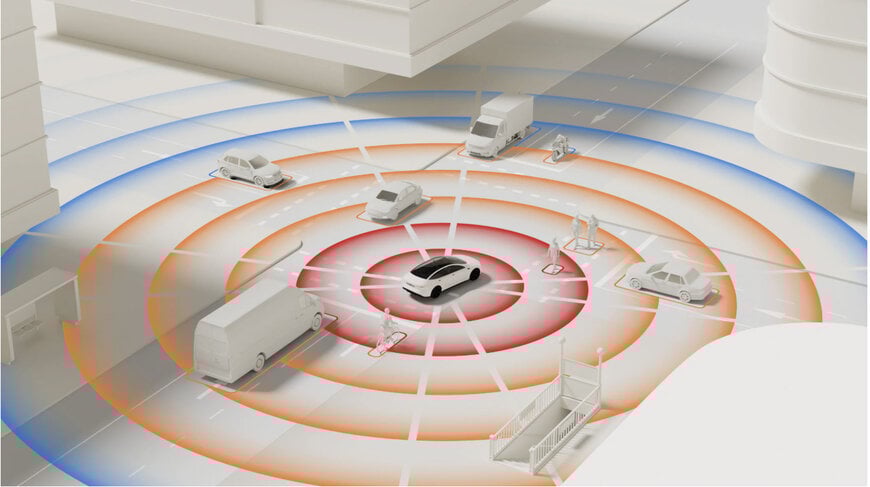
A new automotive radar transceiver integrates high channel density and system-level efficiency to support next-generation imaging radar for advanced driver assistance systems (ADAS) and autonomous vehicles.
High-Resolution Radar for Software-Defined Vehicles
NXP Semiconductors has introduced its third-generation RFCMOS radar transceiver, designed to address increasing performance requirements in ADAS and automated driving systems. As vehicles evolve toward a software-defined architecture, perception systems based on high-resolution radar are becoming critical for object detection, classification, and environmental mapping.
The device integrates eight transmit and eight receive channels (8T8R) on a single monolithic die, enabling scalable radar configurations with up to 576 virtual antenna channels. This architecture supports improved angular resolution, extended detection range, and enhanced dynamic range key parameters for reliable sensing in complex driving environments.
Overcoming System-Level Trade-offs in Radar Design
Traditional radar system scaling has been constrained by increased power consumption, thermal management requirements, and system cost as channel counts rise. The new transceiver addresses these limitations by combining high RF performance with power efficiency comparable to lower-channel devices, such as 3T4R architectures.
Optimised pin configuration and launcher placement improve channel isolation and signal integrity, while reducing interference between transmit and receive paths. These design choices contribute to a lower system bill of materials and simplify integration for OEMs and Tier 1 suppliers.
Scalable Radar Platform and System Integration
The transceiver is part of a broader radar sensing platform and is designed to operate with NXP radar processors, including the S32R series. This enables scalable system configurations ranging from 8T8R up to 32T32R, allowing manufacturers to tailor radar performance according to vehicle segment, regional regulations, and application requirements.
This system-level approach supports integration across the automotive data ecosystem, including in-vehicle networking (CAN, Ethernet) and power management, streamlining development and reducing time to market for ADAS platforms.
Enabling Imaging Radar in Series Production
The technology is already being adopted in next-generation radar systems. FORVIA HELLA is integrating the transceiver into high-resolution radar solutions, with a production program for a major automotive OEM scheduled to enter series production in mid-2028.
By addressing both performance and scalability, the solution supports broader deployment of imaging radar across vehicle line-ups, enabling more advanced safety and automation features.
Role in Advanced Driver Assistance and Autonomous Driving
Imaging radar is a key enabler for Level 2+ to Level 4 automation, providing robust sensing capabilities under conditions where cameras and lidar may be limited, such as low visibility or adverse weather. The integration of high-channel-count radar transceivers allows for more precise object detection and tracking, contributing to safer and more reliable automated driving systems.
Edited by an industrial journalist Sucithra Mani with AI assistance.
www.nxp.com
