
Electronic Design: What Is a Process Design Kit?
The Process Design Kit (PDK) forms the essential technical foundation for designing an integrated circuit that can be manufactured using a given fabrication process.
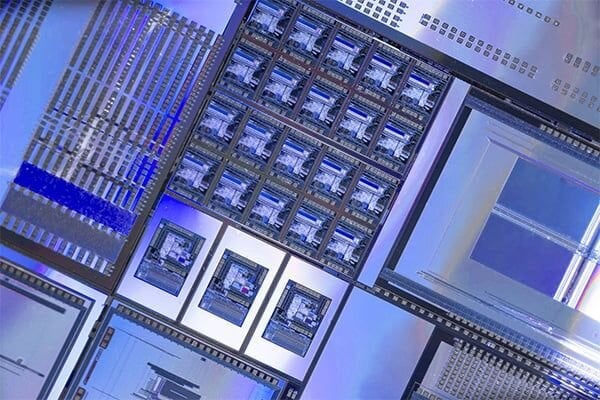
In electronic design, and more specifically in integrated circuit (IC) design, a Process Design Kit (PDK) is a structured set of data, models and rules provided by a semiconductor foundry to enable the design of circuits compatible with a given manufacturing process.
Definition and role of the PDK
A PDK serves as the link between fabrication technology (the foundry’s physical process) and electronic design tools (EDA – Electronic Design Automation). It enables designers to create, simulate and verify integrated circuits while ensuring that the design can be manufactured in compliance with the industrial constraints of the targeted process. Without a PDK, it is not possible to design a circuit that is industrially viable on a given process.
Typical contents of a PDK
A PDK generally brings together several categories of elements:
• Design rules: Geometrical constraints defining minimum widths, spacings, layer overlaps, densities, etc. These rules ensure the manufacturability of the circuit.
• Device models: Electrical models (SPICE or equivalent) describing the behaviour of transistors, resistors, capacitors and other devices, including their variations across process, voltage and temperature (PVT).
• Cell libraries: Standard cells, analogue macros or process-specific blocks, with their schematic, physical (layout) and timing views.
• Verification files: Scripts and decks for DRC (Design Rule Check), LVS (Layout Versus Schematic) and sometimes ERC (Electrical Rule Check) verification.
• Technology data: Description of process layers, material parameters, metal stacks, interconnect rules and available options.
Use in the design flow
The PDK is used at every stage of the integrated circuit design cycle, including schematic design and simulation, placement and routing, physical verification, electrical and thermal performance analysis, and preparation of data for manufacturing (tape-out).
Each process node (for example 180 nm, 65 nm, 28 nm, FinFET, FD-SOI, etc.) has its own PDK, which is regularly updated by the foundry.
Industrial importance
The PDK is a key element in collaboration between foundries, circuit designers and EDA tool vendors. It determines the reliability of simulations, the compliance of the design with manufacturing constraints, production yields and, ultimately, the industrial viability of the circuit.
In advanced electronic technology design, the PDK is becoming increasingly complex, integrating multiphysics models, variability constraints and rules specific to performance or power optimisation.
Published by Youssef Belgnaoui, editor for Induportals.
