
electronics-journal.com
07
'26
Written on Modified on
Fujisoft develops AI security system on AMD platform
Integrated FPGA and x86 architecture enables low-latency AI image recognition for industrial site monitoring and reduced false alarms.
www.amd.com
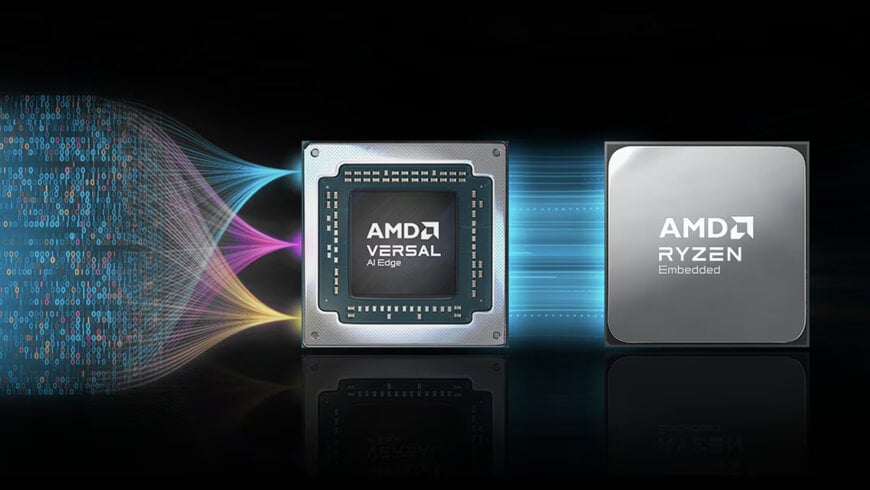
AMD Embedded+ Architecture
In industrial automation, warehouse operations, and smart facility management, the increasing number of sensors and cameras is driving demand for intelligent AI-based security systems capable of processing data locally with minimal latency. Fujisoft is addressing this need with an AI-powered site security system built on the AMD Embedded+ platform, combining adaptive computing and embedded processing in a single architecture.
AI-based detection beyond conventional motion sensing
Traditional surveillance systems rely heavily on motion detection, which often leads to false positives caused by lighting changes, shadows, or non-critical movement. Fujisoft’s system introduces AI-driven image recognition to distinguish between relevant and irrelevant events, improving detection accuracy in complex industrial environments.
This capability is particularly relevant in facilities such as factories and logistics centers, where continuous activity and environmental variability can compromise conventional monitoring systems. By applying trained models at the edge, the system can identify specific objects, behaviors, or anomalies in real time.
Embedded architecture combining adaptive and x86 processing
At the core of the solution is the AMD Embedded+ platform, which integrates a Ryzen Embedded processor with a Versal adaptive system-on-chip (SoC) on a single board. This architecture combines general-purpose x86 processing with FPGA-based adaptability, enabling parallel data handling and hardware-level acceleration.
The programmable I/O capabilities allow the system to interface with a wide range of sensors and cameras, supporting heterogeneous data streams. This is essential for multi-sensor environments where video, thermal imaging, and other inputs must be processed simultaneously.
The unified design also reduces system complexity compared to multi-board solutions, helping shorten development cycles and lower integration costs.
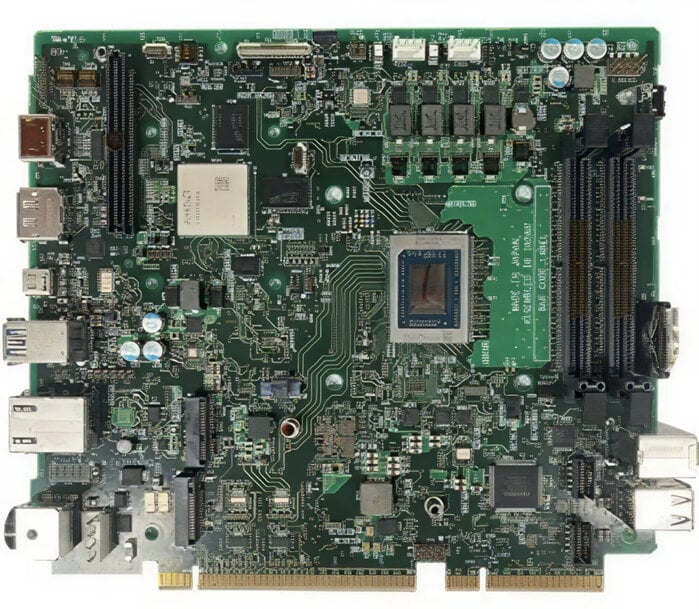
AMD Embedded+ platform
Edge AI processing for low-latency security systems
A key technical advantage of the platform is its ability to perform AI inference at the edge rather than relying on cloud-based processing. This reduces latency and ensures faster response times for critical events, such as unauthorized access or safety incidents.
Local processing also improves data privacy and reduces bandwidth requirements, which is particularly important in large-scale deployments with hundreds of cameras.
Development status and deployment outlook
Fujisoft completed a demonstration unit in 2025 and is currently refining the system for broader deployment across industrial and commercial sites. The development focuses on adapting the solution to real-world operational challenges identified through customer feedback, including system scalability and integration with existing infrastructure.
According to Fujisoft Manager, Naoya Yanagitsubo, the integration of adaptive and embedded technologies enables the system to address specific challenges in modern security environments, particularly those requiring both flexibility and high processing performance.
Position within the edge AI security market
AI-enabled surveillance systems are increasingly incorporating edge computing capabilities, with comparable approaches seen in platforms using GPU-based modules or dedicated AI accelerators. However, the combination of FPGA adaptability and x86 processing in a single embedded platform provides an alternative design approach, particularly suited for applications requiring customizable data pipelines and deterministic performance.
This makes the solution relevant for industrial security, smart infrastructure, and other environments where reliability, latency, and adaptability are critical selection criteria.
Edited by Natania Lyngdoh, Induportals Editor — Adapted by AI.
www.amd.com
In industrial automation, warehouse operations, and smart facility management, the increasing number of sensors and cameras is driving demand for intelligent AI-based security systems capable of processing data locally with minimal latency. Fujisoft is addressing this need with an AI-powered site security system built on the AMD Embedded+ platform, combining adaptive computing and embedded processing in a single architecture.
AI-based detection beyond conventional motion sensing
Traditional surveillance systems rely heavily on motion detection, which often leads to false positives caused by lighting changes, shadows, or non-critical movement. Fujisoft’s system introduces AI-driven image recognition to distinguish between relevant and irrelevant events, improving detection accuracy in complex industrial environments.
This capability is particularly relevant in facilities such as factories and logistics centers, where continuous activity and environmental variability can compromise conventional monitoring systems. By applying trained models at the edge, the system can identify specific objects, behaviors, or anomalies in real time.
Embedded architecture combining adaptive and x86 processing
At the core of the solution is the AMD Embedded+ platform, which integrates a Ryzen Embedded processor with a Versal adaptive system-on-chip (SoC) on a single board. This architecture combines general-purpose x86 processing with FPGA-based adaptability, enabling parallel data handling and hardware-level acceleration.
The programmable I/O capabilities allow the system to interface with a wide range of sensors and cameras, supporting heterogeneous data streams. This is essential for multi-sensor environments where video, thermal imaging, and other inputs must be processed simultaneously.
The unified design also reduces system complexity compared to multi-board solutions, helping shorten development cycles and lower integration costs.
AMD Embedded+ platform
Edge AI processing for low-latency security systems
A key technical advantage of the platform is its ability to perform AI inference at the edge rather than relying on cloud-based processing. This reduces latency and ensures faster response times for critical events, such as unauthorized access or safety incidents.
Local processing also improves data privacy and reduces bandwidth requirements, which is particularly important in large-scale deployments with hundreds of cameras.
Development status and deployment outlook
Fujisoft completed a demonstration unit in 2025 and is currently refining the system for broader deployment across industrial and commercial sites. The development focuses on adapting the solution to real-world operational challenges identified through customer feedback, including system scalability and integration with existing infrastructure.
According to Fujisoft Manager, Naoya Yanagitsubo, the integration of adaptive and embedded technologies enables the system to address specific challenges in modern security environments, particularly those requiring both flexibility and high processing performance.
Position within the edge AI security market
AI-enabled surveillance systems are increasingly incorporating edge computing capabilities, with comparable approaches seen in platforms using GPU-based modules or dedicated AI accelerators. However, the combination of FPGA adaptability and x86 processing in a single embedded platform provides an alternative design approach, particularly suited for applications requiring customizable data pipelines and deterministic performance.
This makes the solution relevant for industrial security, smart infrastructure, and other environments where reliability, latency, and adaptability are critical selection criteria.
Edited by Natania Lyngdoh, Induportals Editor — Adapted by AI.
www.amd.com
