
electronics-journal.com
09
'26
Written on Modified on
Heterogeneous Architecture for Agentic AI Inference and Throughput Optimization
Intel and SambaNova Systems have established a collaborative engineering framework to integrate x86 processors with Reconfigurable Dataflow Units for high-capacity generative AI workloads.
www.intel.com
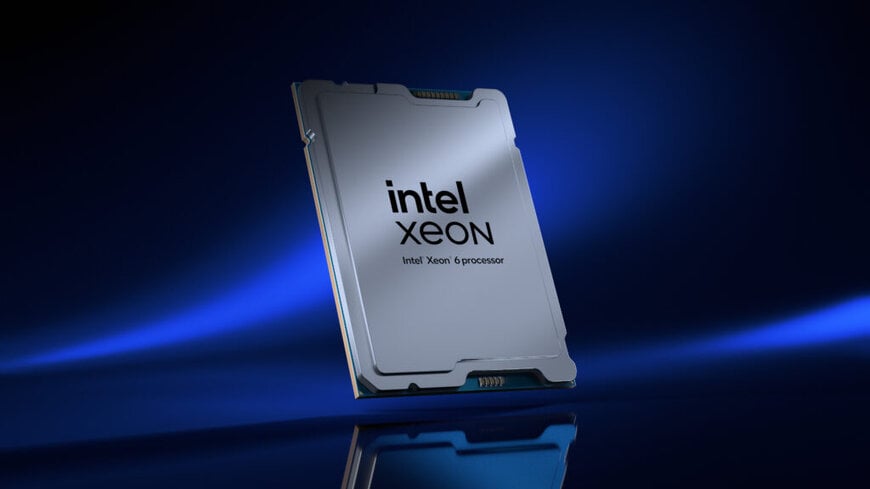
The transition of agentic AI from experimental phases to production environments requires specialized hardware configurations to overcome the latency and throughput bottlenecks inherent in monolithic GPU architectures. This heterogeneous blueprint utilizes Intel Xeon 6 processors for system orchestration and SambaNova Reconfigurable Dataflow Units (RDUs) to accelerate the decoding phase of large language model inference.
Architectural Partitioning for Inference Phases
The joint design optimizes the two primary stages of the inference cycle: prefill and decode. While conventional GPUs handle the initial compute-heavy prefill operations, the SambaNova RDU architecture is utilized specifically for high-throughput decoding. This separation addresses the memory-bandwidth limitations often encountered when scaling token generation in agentic workflows. By offloading the sequential decoding process to RDUs, the system maintains lower latency during high-concurrency operations.
Intel Xeon 6 processors serve as the central host and action CPUs within this digital supply chain of data processing. These processors manage the complex logic and external tool integration required by agentic AI, ensuring that the AI agent can interact with existing enterprise databases and software APIs. This configuration leverages the high core counts and integrated acceleration features of the Xeon 6 series to reduce the overhead of non-matrix math tasks.
Integration within the Automotive Data Ecosystem
In complex sectors such as the automotive data ecosystem, this architecture enables real-time processing of telemetry data and supply chain logistics through agentic workflows. Technical use cases include the deployment of sovereign AI environments where data security and localized processing are mandatory. By utilizing the mature x86 software foundation, enterprises can deploy these advanced inference models without refactoring the legacy codebases that manage manufacturing and diagnostic systems.
Kevork Kechichian, Executive Vice President and General Manager of the Data Center Group at Intel Corporation, noted that the data center software ecosystem is built on x86, providing a foundation that developers and cloud providers rely on at scale. He stated that future workloads require a heterogeneous mix of computing to deliver cost-efficient, high-performance inference.
Technical Availability and Standards Compliance
The collaboration aims to maintain compatibility with existing data center standards while improving energy efficiency per token generated. The design targets enterprises, cloud service providers, and sovereign AI initiatives that require predictable performance for long-context window applications.
This jointly engineered solution is scheduled for release to the global market in the second half of 2026. The implementation will follow standard PCIe and CXL interconnect protocols to ensure interoperability with existing rack-scale infrastructure and cooling requirements in modern data centers.
Edited by Evgeny Churilov, Induportals Media - Adapted by AI.
www.intel.com
