
electronics-journal.com
24
'26
Written on Modified on
Third-Generation SiC Semiconductors for Electric Mobility
Bosch develops new chips to improve efficiency and power density in electric drivetrain systems.
www.bosch.com
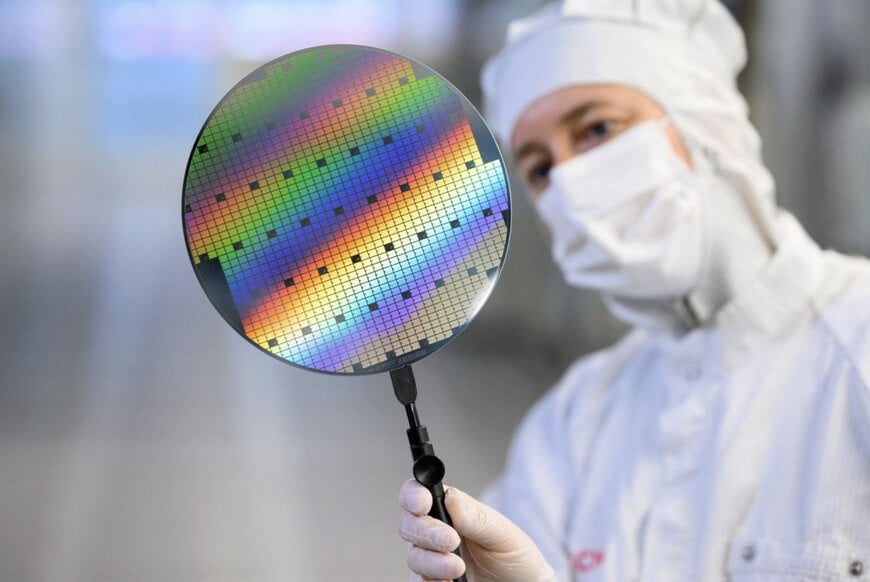
Silicon carbide (SiC) semiconductors are key components in electric vehicle power systems, where they contribute to improved energy efficiency and extended driving range. Bosch has initiated the introduction of its third-generation SiC chips, supplying samples to global automotive manufacturers for validation in electric drivetrain platforms.
Technological evolution of SiC semiconductors
SiC devices operate at higher switching frequencies than conventional silicon semiconductors, reducing energy losses and improving thermal management. This enables higher power density in electronic systems, directly impacting overall vehicle efficiency.
The third generation developed by Bosch introduces measurable performance improvements: according to the company, the new chips deliver 20% higher performance compared to the previous generation while also being smaller in size. This miniaturization increases the number of devices produced per wafer, supporting industrial scalability and reducing unit costs. Since 2021, Bosch has delivered more than 60 million SiC chips worldwide.
Applications in drivetrain systems and the automotive data ecosystem
Within the automotive data ecosystem, SiC semiconductors are primarily integrated into inverters and power conversion systems, where they regulate energy flow between the battery and the electric motor. Higher conversion efficiency results in reduced transmission losses and more effective use of battery capacity.
These characteristics make SiC chips particularly relevant for high-performance electric vehicles and scalable platforms, where optimized energy management is a critical factor.
Manufacturing investments and digital supply chain
The expansion of SiC semiconductor production is supported by significant investments. Bosch has allocated approximately €3 billion to semiconductor development as part of European IPCEI programs for microelectronics and communication technologies.
Third-generation production takes place at the Reutlingen facility in Germany using 200 mm wafers. In early 2025, Bosch acquired an additional manufacturing site in Roseville, California, where advanced production lines are currently being installed. The company plans to invest a further €1.9 billion in this facility, which will initially supply sample chips for customer testing.
Distributing production across Europe and the United States strengthens the resilience of the digital supply chain in the automotive sector, reducing dependence on single regions.
Market outlook and scalability
According to Yole Intelligence, the global market for SiC power semiconductors is expected to grow from $2.3 billion in 2023 to approximately $9.2 billion by 2029, driven primarily by electromobility.
Bosch aims to expand its production capacity to reach volumes in the hundreds of millions of units, aligning with increasing demand for high-performance components in electric vehicles.
Manufacturing process and device architecture
A distinguishing element in the development of these chips is the adaptation of the “Bosch process,” originally introduced in 1994 for sensor manufacturing. This etching method enables the creation of high-precision vertical structures in silicon carbide.
The resulting architecture increases device power density, improving performance in energy conversion systems. This approach represents one of the key technical foundations of the third generation of SiC semiconductors.
Edited by Maria Brueva, Induportals editor – adapted by AI.
www.bosch.com
