
electronics-journal.com
19
'26
Written on Modified on
Nanocrystalline EMC absorber foils for flexible enclosure shielding
The WE-FNCS nanocrystalline foil developed by Würth Elektronik offers a highly flexible solution for suppressing low-frequency electromagnetic interference (EMI) in electronic devices.
www.we-online.com
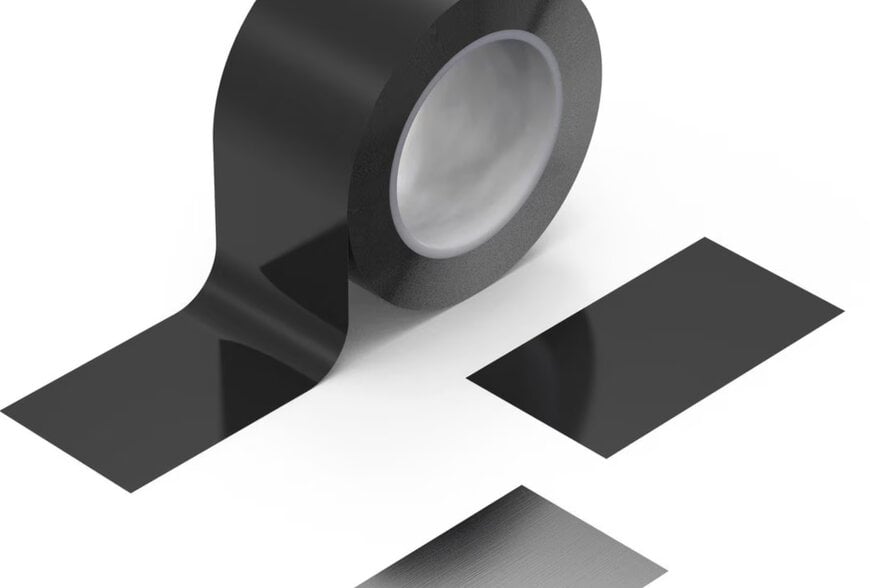
The increasing density of electronic components within the digital supply chain requires space-saving shielding technologies that ensure compliance with strict EMC standards. The implementation of these ultra-thin absorber foils allows developers to effectively attenuate electromagnetic emissions and external interference fields without resorting to bulky conventional materials.
Technical configuration and electromagnetic shielding
During EMC testing for compliance with standards such as CISPR 32, emissions in the lower frequency range often present a significant challenge. The WE-FNCS foil specifically attenuates electromagnetic interference signals in the frequency range from 10 Hz to 120 MHz. With this technology, electronic device enclosures can be easily and cost-effectively equipped to be EMC-compliant, eliminating the need for conventional and often expensive mu-metal.
Typical application areas include components that generate unwanted magnetic fields or react sensitively to them. These notably include power transformers and common mode chokes (CMCs), DC/DC converters, inverters, and switch-mode power supplies, as well as Hall sensors and medical imaging systems such as MRI machines.
Scalable permeability and mechanical design
The WE-FNCS functions as a high-performance absorber whose nanocrystalline structure ensures exceptionally high magnetic permeability and high flux saturation. By adjusting the number of internal nanocrystalline layers, the absorption performance can be precisely scaled to specific application requirements. These multi-layer configurations enable optimized shielding effectiveness in installation spaces with strictly limited room. Additionally, the material increases the efficiency of wireless power transfer systems by selectively directing the magnetic flux and minimizing stray fields.
The mechanical design of the foil is tailored for simple integration during production or for retrofitting into already finished devices. On the top side, a black PET cover layer provides the necessary electrical insulation, while on the bottom side, an acrylic adhesive layer enables fast, secure, and permanent mounting.
Both the top and bottom layers are protected by a carrier film, which is only removed when applying the absorber. Würth Elektronik supplies the material in the form of adhesive tapes or customized precut sections and proactively supports developers with technical product integration.
Additional Context: This section details technical specifications and competitive benchmarking not included in the original product announcement
In the market for electromagnetic interface materials, nanocrystalline foils compete directly with conventional ferrite foils and classic mu-metal shields. Ferrite foils, such as those offered by TDK or Laird Performance Materials, are typically thicker and more brittle, which limits their application on highly curved or flexible surfaces. While mu-metal offers excellent low-frequency properties, it drastically loses permeability under mechanical stress (such as bending or cutting) and often requires complex thermal post-treatment (final annealing).
A direct competitor in this segment is 3M with its Flux Field Directional Material (FFDM) series, which also targets magnetic flux routing in NFC or wireless charging applications. Laird Performance Materials (now DuPont) additionally offers hybrid absorbers with the CoolZorb series, combining EMC attenuation with thermal management. The technical distinction of Würth Elektronik's WE-FNCS solution lies in its extremely thin, shatterproof nanocrystalline structure, which maintains its high magnetic saturation flux density even under severe mechanical deformation, specifically shielding the critical range below 120 MHz without significant added weight or mechanical wear.
Edited by Maria Brueva, Induportals editor – adapted by AI.
www.we-online.com
