
electronics-journal.com
09
'26
Written on Modified on
Keysight Targets the Hidden Cost of UI Test Authoring and Maintenance
Keysight Technologies has launched Eggplant Find by Description to automate interface element identification using textual descriptions instead of image-based screenshots.
www.keysight.com
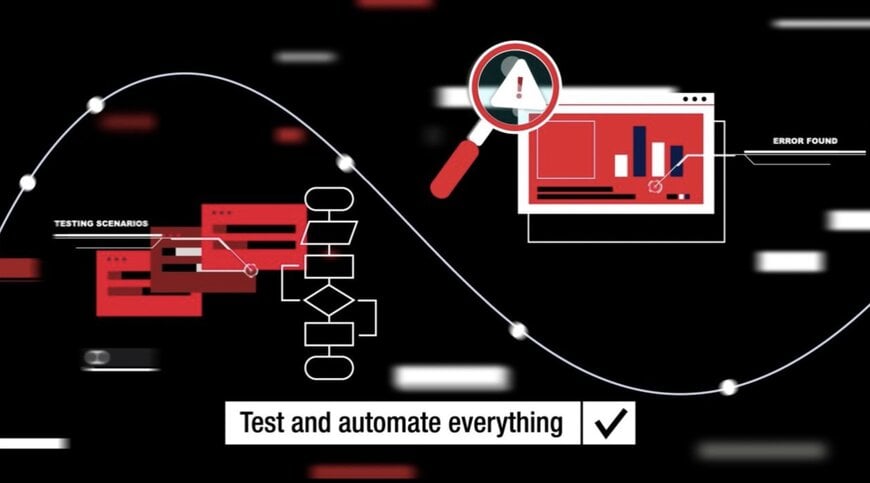
Keysight Technologies has announced the launch of Keysight Eggplant Find by Description, an interface element location tool developed for test automation engineering workflows. The software allows test engineers to target user interface (UI) components by detailing their descriptive parameters rather than capturing, storing, and matching conventional pixel-based screenshots. The platform executes scripts through textual description analysis, enabling test routines to continue running through software redesigns, theme changes, and display resolution modifications without requiring manual recapture work.
Script Maintenance and UI Upkeep Challenges
A primary barrier to scalable test automation within software organizations is the continuous upkeep and maintenance of testing scripts that break as application interfaces iterate. Maintaining traditional image-based verification scripts presents a significant operational overhead, as minor design alterations cause test scripts to fail even when the underlying software functions correctly. Test engineers must frequently spend multiple hours recapturing UI screenshots for test cases that should fundamentally pass, creating a repetitive maintenance cycle across different product releases and runtime environments.
Integrated as a core feature within Eggplant Studio and Eggplant Functional, the Find by Description tool allows an engineer to define a specific target element—such as a ticket price corresponding to a designated date—to locate it automatically. The system operates independently of captured screenshots, Document Object Model (DOM) code access, or any direct modifications to the system under test (SUT). During an internal evaluation, this text-based description methodology reduced total script volume by 92 percent and compressed the completion window of the test configuration task from over one hour to under 15 minutes.
Artificial Intelligence and Automation Workflows
The platform expands the vendor's integration of artificial intelligence (AI) and computer vision techniques within automated software verification. By utilizing semantic descriptions rather than static coordinates or visual matching constraints, a single script remains functional across design updates. This testing approach can be deployed across legacy desktop applications, embedded systems, and modern web environments.
The product introduction focuses on three core automation operational metrics:
- Test Resiliency: Test sequences remain stable through front-end redesigns, system theme updates, and hardware resolution shifts, preventing automation breaks during interface changes.
- Script Optimization: Minimizing the engineering hours required to write and debug broken test scripts allows organizations to redirect development resources toward expanding total test coverage.
- Task Automation: The text description framework allows complex visual verification sequences—which previously required manual intervention due to image-matching limitations—to run within fully automated execution pipelines.
Additional Context
This section details technical specifications not included in the original news release.
Traditional test automation platforms rely on coordinate-based charting, DOM tree navigation, or template matching via structural image recognition. Template matching uses cross-correlation algorithms to compare a static baseline screenshot against the active framebuffer pixels of a system under test. This technique fails if the underlying UI scales, changes its aspect ratio, or alters its contrast due to dark-mode theme toggles, because the absolute pixel deltas deviate from the reference image.
The Find by Description platform addresses these visual dependencies by processing the active display output through an integrated Optical Character Recognition (OCR) and deep-learning object detection pipeline. Rather than inspecting the source code or matching raw pixel patterns, the computer vision engine parses the graphical interface layout, extracts text strings, and identifies bounding boxes around interactive elements like buttons, input fields, and data cells.
Natural Language Processing (NLP) models then map the engineer's textual intent to the semantically matching layout coordinates, allowing the test executor to interact with the targeted component regardless of changes to its color, font style, or absolute screen position.
Edited by Romila DSilva, Induportals Editor, with AI assistance.
This section details technical specifications not included in the original news release.
Traditional test automation platforms rely on coordinate-based charting, DOM tree navigation, or template matching via structural image recognition. Template matching uses cross-correlation algorithms to compare a static baseline screenshot against the active framebuffer pixels of a system under test. This technique fails if the underlying UI scales, changes its aspect ratio, or alters its contrast due to dark-mode theme toggles, because the absolute pixel deltas deviate from the reference image.
The Find by Description platform addresses these visual dependencies by processing the active display output through an integrated Optical Character Recognition (OCR) and deep-learning object detection pipeline. Rather than inspecting the source code or matching raw pixel patterns, the computer vision engine parses the graphical interface layout, extracts text strings, and identifies bounding boxes around interactive elements like buttons, input fields, and data cells.
Natural Language Processing (NLP) models then map the engineer's textual intent to the semantically matching layout coordinates, allowing the test executor to interact with the targeted component regardless of changes to its color, font style, or absolute screen position.
Edited by Romila DSilva, Induportals Editor, with AI assistance.
