
electronics-journal.com
07
'26
Written on Modified on
High-Performance Microcontrollers for Automotive Smart Cockpit Display Systems
Infineon develops a new processing unit leveraging external LPDDR4 memory to drive dual high-resolution displays without requiring complex system-on-chip platforms.
www.infineon.com
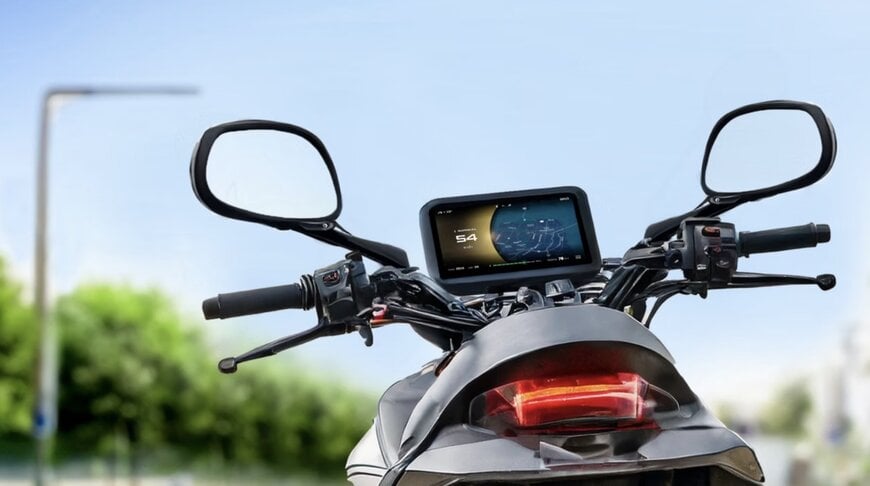
Infineon is releasing the TRAVEO CYT4EN, an automotive microcontroller designed to operate high-performance instrument clusters and multi-screen applications. This hardware component specifically targets smart cockpit systems in passenger vehicles and two-wheelers by replicating the graphic processing capabilities traditionally reserved for higher-tier system-on-chip architectures.
Memory Integration and Graphic Processing Capabilities
The CYT4EN microcontroller interfaces directly with external LPDDR4 memory, utilizing an optimized memory subsystem developed in collaboration with Micron. This architecture ensures sufficient bandwidth for 2.5D graphics and 3D scene rendering. The processing unit can output up to Full HD resolutions and drive two distinct display panels simultaneously. By combining standard automotive microcontroller response times with high-bandwidth memory access, the hardware reduces overall bill of materials and board complexity for automotive display architectures.
Hardware Efficiency and Functional Safety Standards
Traditional system-on-chip platforms often require multi-second initialization sequences and extensive thermal management. In contrast, this highly integrated microcontroller achieves deterministic boot times of less than 150 milliseconds. The processing unit supports functional safety certifications up to ASIL-B according to ISO 26262 and was developed in accordance with the ISO 21434 standard for automotive cybersecurity. An independent voltage domain allows core communication and basic processing functions to remain active during low-power states, conserving energy while maintaining vehicle network connectivity and system robustness.
System Integration and Printed Circuit Board Design
At the integration level, the hardware eliminates the need for supplementary system management or in-vehicle network communication microcontrollers. The optimized power efficiency negates the requirement for active cooling mechanisms and allows engineers to utilize simplified printed circuit board layouts containing as few as six layers. This direct reduction in manufacturing complexity aids automotive tier-one suppliers in cost optimization.
Thomas Boehm, Senior Vice President of Automotive Microcontrollers at Infineon, noted the structural rationale: "By combining the simplicity, safety, and fast responsiveness of an MCU architecture with the high-bandwidth memory required for modern cockpit graphics, we are enabling a new generation of vehicle displays."
Additional Context
This section details technical specifications and competitive benchmarking not included in the original news release.
In the automotive display microcontroller market, manufacturers differentiate hardware based on memory interfaces, graphics acceleration capabilities, and boot times. NXP Semiconductors offers the i.MX RT1170 crossover microcontroller, which operates at up to 1 GHz using an Arm Cortex-M7 and M4 dual-core architecture. The NXP device supports 2D vector graphics and interfaces with external SDRAM, targeting digital clusters and infotainment systems. Renesas provides the RH850/D1M series, which integrates a 2D and 3D drawing engine alongside an embedded video RAM, eliminating the need for external memory in lower-tier cluster applications while supporting external DDR for higher resolutions.
Compared to these architectures, the Infineon TRAVEO CYT4EN focuses on the LPDDR4 memory subsystem to bridge the gap between traditional microcontrollers and complex graphic processors. While the Renesas RH850/D1M relies heavily on embedded video RAM to minimize external components for basic instrument clusters, the Infineon unit requires external LPDDR4 to achieve its dual-display Full HD rendering. This positions the Infineon hardware closer to system-on-chip visual performance while maintaining the sub-150 millisecond boot times characteristic of standard automotive microcontrollers.
Edited by Aishwarya Mambet, Induportals Editor, with AI assistance.
www.infineon.com
