
electronics-journal.com
18
'25
Written on Modified on
Samsung Electronics advances memory modules
SOCAMM2 outperforms traditional RDIMM for AI servers, delivering over double the bandwidth and 55% less power consumption in a highly responsive, energy-efficient memory solution.
semiconductor.samsung.com
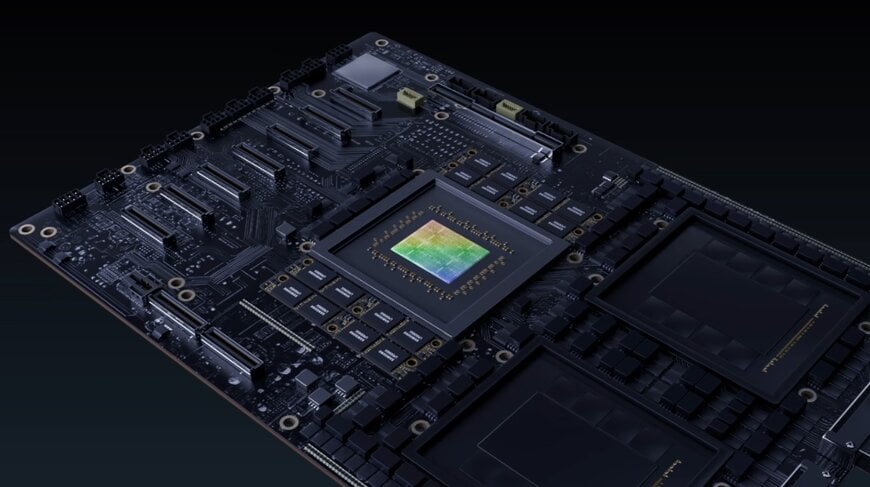
Samsung Electronics has introduced the SOCAMM2 (Small Outline Compression Attached Memory Module), a detachable LPDDR-based server memory module targeting next-generation AI infrastructure where high throughput and energy efficiency are critical. Built on LPDDR5X technology, SOCAMM2 is positioned for AI server use cases including inference-optimized workloads and large language model deployments in high-density data centers.
Traditional server memory architectures in data centers have relied on DDR-based registered DIMMs (RDIMMs) to balance capacity and general computing performance. However, the rise of large-scale AI inference and mixed training/inference workloads has increased demand for memory that delivers both high bandwidth and reduced power consumption. SOCAMM2 represents a shift in the digital supply chain for memory, integrating LPDDR technology — historically used in mobile and low-power devices — into a modular form factor intended for enterprise AI servers.
By using LPDDR5X DRAM, SOCAMM2 delivers more than twice the bandwidth of comparable RDIMM modules while consuming over 55 percent less power under intensive AI workloads. This combination addresses a core bottleneck in AI server design: high data throughput without proportionate increases in energy use or cooling demands.
Technical Characteristics and Integration
SOCAMM2’s architecture combines LPDDR5X DRAM with a detachable module form factor, enabling system designers to upgrade or replace memory without mainboard rework. This contrasts with soldered LPDDR implementations that limit serviceability and lifecycle flexibility. Modular attachment also facilitates more efficient thermal management and system integration, with a horizontal layout that improves airflow and is compatible with both air and liquid cooling solutions common in high-density AI deployments.
From a standards perspective, the SOCAMM2 format is part of broader industry efforts to define JESD328, a JEDEC specification for compact LPDDR server memory modules that supports LPDDR5X data rates up to 9.6 gigabits per second per pin where signal integrity permits. This standardization aims to broaden vendor interoperability and support higher density configurations in AI servers.
Application Areas and Use Cases
SOCAMM2 targets multiple technical use cases within large-scale computing environments. In inference-focused data centers, the high bandwidth and low power profile reduce time to first token (TTFT) and sustained inference latency for large language models and multimodal AI systems. In AI training clusters, power savings translate to lower operational costs and reduced cooling infrastructure demands, particularly in full-rack deployments where memory density can exceed tens of terabytes.
The modular nature of SOCAMM2 also supports scalable memory configurations in systems where workload requirements evolve over time, enabling capacity expansion without wholesale hardware redesign. This flexibility is relevant for cloud providers and enterprises managing heterogeneous AI workloads.
Ecosystem Collaboration and Standardization
Samsung’s development of SOCAMM2 has involved collaboration with key ecosystem partners including NVIDIA, where joint technical optimization has focused on responsiveness and efficiency for accelerated computing platforms. NVIDIA’s involvement reflects broader industry alignment around low-power, high-bandwidth memory for AI infrastructure.
Simultaneously, participation in JEDEC’s standardization process underscores efforts to establish SOCAMM2 and related LPDDR server memory formats as interoperable, widely supported solutions across hardware platforms. Published specifications are expected to facilitate adoption beyond proprietary implementations.
Competitive and Industry Context
Other semiconductor manufacturers are also advancing SOCAMM2 modules. For example, Micron Technology has begun sampling 192 GB SOCAMM2 modules built on its advanced 1-gamma LPDDR5X DRAM process, achieving over 20 percent improvement in power efficiency and increased capacity in the same compact footprint. These developments signal broader industry momentum toward LPDDR-based server memory in AI data centers.
SOCAMM2 reflects a broader transition within the automotive data ecosystem and AI infrastructure toward modular, energy-efficient memory architectures capable of meeting the scalability and performance demands of modern AI workloads. By combining LPDDR5X’s low power profile with a scalable form factor and industry standard alignment, SOCAMM2 contributes to evolving memory strategies in next-generation data centers.
www.semiconductor.samsung.com
