
electronics-journal.com
29
'26
Written on Modified on
High-Efficiency Sub-6GHz Power Amplifier Module
NEC Corporation develops a compact PAM to reduce power consumption and size in 5G radio units.
www.nec.com
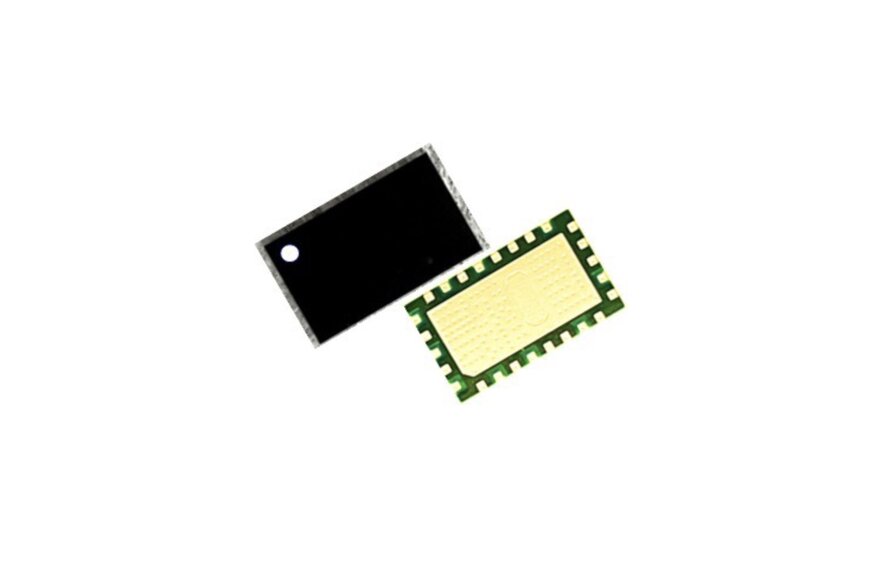
NEC Corporation has developed a high-efficiency, compact Power Amplifier Module (PAM) for the sub-6GHz band, targeting integration into 5G base station Radio Units (RUs) to lower energy consumption and operational costs for mobile network operators.
Power consumption challenge in 5G radio units
In 5G base stations, the radio unit is a major contributor to network energy use. Within the RU, the power amplifier module accounts for roughly 75% of total power consumption, making it a critical component for efficiency improvements. As 5G deployments expand, particularly in dense urban environments, the cumulative energy demand of RUs has become a central operational and cost concern for telecom operators.
Because sub-6GHz 5G uses higher frequencies than 4G, each RU typically covers a smaller geographic area. Maintaining coverage therefore requires a higher density of deployed units, amplifying the importance of reducing power consumption at the component level.
PAM design and performance characteristics
NEC’s newly developed PAM addresses efficiency and size constraints simultaneously, a combination that has traditionally been difficult to achieve. The module integrates several of NEC’s core technologies, including high-efficiency circuit design based on Gallium Nitride (GaN) devices, high-density mounting techniques, and advanced simulation methods for load modulation.
The PAM achieves a Power-Added Efficiency (PAE) of 50%, a metric that indicates how effectively supplied DC power is converted into amplified RF output. Compared with conventional PAM designs, this corresponds to an approximate 10% reduction in power consumption. The module is also highly compact, with dimensions of 10 mm × 6 mm, supporting more flexible RU design and higher component integration density.
Integration into radio units and deployment plans
NEC plans to incorporate the new PAM into its next generation of 5G radio units, scheduled for release in the first half of fiscal year 2026. Beyond internal use, NEC also intends to offer the PAM as a standalone component for global deployment, including potential integration into base stations produced by other manufacturers.
By reducing the power draw of individual RUs, the PAM contributes to overall network-level energy savings, which is particularly relevant as operators scale 5G infrastructure to meet growing data traffic and coverage requirements.
Application and operational impact
Lower-power RUs can help operators reduce operating expenditures related to electricity consumption and cooling, while also supporting sustainability objectives. The compact form factor of the PAM enables more flexible equipment design, which can be advantageous in space-constrained installations such as rooftop or indoor small-cell deployments.
From a network engineering perspective, improvements in amplifier efficiency directly translate into better thermal management and potentially longer component lifetimes, contributing to improved system reliability.
Industry presentation and outlook
NEC will present the new PAM at MWC Barcelona 2026, held from March 2 to 5, 2026. The company plans to highlight the module’s efficiency gains, energy-saving effects, and the increased design flexibility it offers for 5G radio equipment.
Looking ahead, NEC positions the PAM as part of its broader effort to balance high performance with energy efficiency in network infrastructure, addressing both the technical demands of advanced mobile communications and the sustainability challenges facing the telecommunications sector.
www.nec.com
