
electronics-journal.com
17
'26
Written on Modified on
Infineon supports zonal E/E architecture in Neue Klasse
Collaboration with BMW Group introduces centralized computing and software-defined vehicle functions for electrified platforms, integrating networking, control and power distribution layers.
www.infineon.com
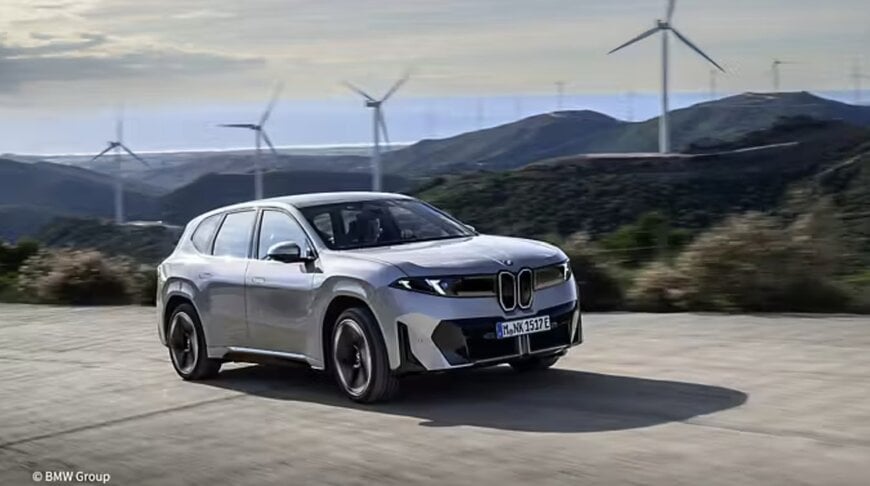
Software-defined vehicles shift functionality from fixed ECUs to centralized computing and networked control, affecting propulsion, driver assistance and energy management. Within this context, Infineon Technologies AG contributes semiconductor components to the E/E architecture of BMW Group’s Neue Klasse platform.
Centralized computing replaces distributed control units
The Neue Klasse architecture uses multiple domain computers rather than numerous independent ECUs, a layout increasingly associated with the software-defined vehicle. Infineon provides AURIX™ and TRAVEO™ microcontrollers, BRIGHTLANE™ Ethernet connectivity, OPTIREG™ power ICs and PROFET™ smart switches and eFuses.
Separating software from hardware allows software-over-the-air (SOTA) updates without hardware changes. This enables vehicle functions to be modified post-production to meet regulatory or feature requirements, a capability increasingly required in connected automotive data ecosystem deployments.
One controller governing vehicle dynamics
Four central computers (“Superbrains”) handle vehicle functions. One unit, referred to as the “Heart of Joy,” manages acceleration, braking and steering within a single processing system rather than distributed modules.
The controller is based on a latest-generation AURIX™ TC4D microcontroller and connects to other systems through BRIGHTLANE™ automotive Ethernet. Real-time communication reduces latency between motion control subsystems. Consolidation of control functions also supports coordinated regenerative braking, contributing to increased driving range.
The remaining computing units manage automated driving, infotainment and base vehicle functions. Three Zone Control Units aggregate sensors and actuators and distribute power and data to endpoint ECUs handling traction inverter control, battery management, and onboard charging.
Wiring reduction and software-controlled power distribution
The zonal topology changes physical vehicle integration. In the BMW iX3 implementation, the wiring harness is approximately 600 meters shorter than earlier vehicle generations, corresponding to about 30% weight reduction.
Conventional fuses are partially replaced by programmable eFuses from the PROFET™ Wire Guard family, with up to 150 per vehicle substituted. The devices allow software-controlled load switching: non-essential loads are disconnected depending on operating state, such as charging, parking or driving. The resulting load management reduces energy consumption by roughly 20%.
Implications for electric platform scalability
The architecture combines centralized processing, Ethernet communication and distributed power electronics to support long-term feature expansion. Because software functions are decoupled from hardware modules, vehicle behavior can be modified across its lifecycle while maintaining the same electronic architecture. This approach aligns with the broader automotive industry migration toward scalable electric platforms and software-defined vehicle architectures.
www.infineon.com
