
Semiconductor Innovation Summit Advances AI Manufacturing Technologies
CEA-Leti hosts LID World Summit 2026 to showcase semiconductor technologies enabling scalable AI factories and cross-industry applications.
www.cea.fr
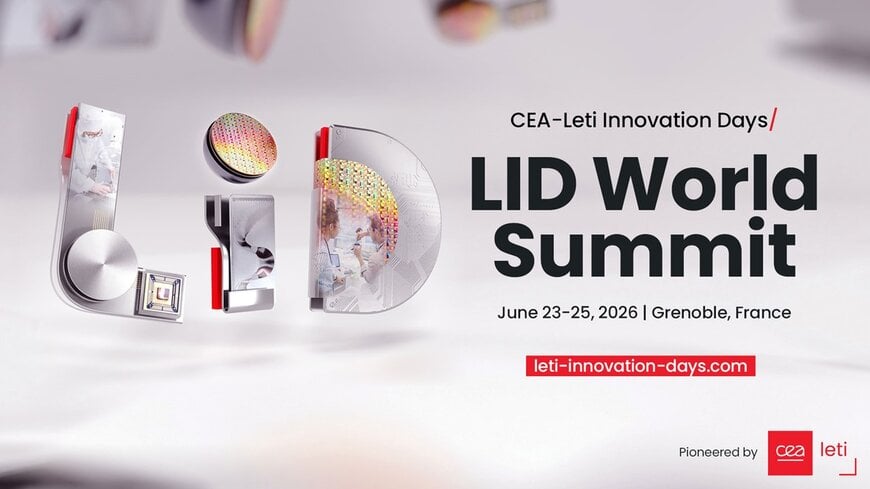
The LID World Summit 2026, organised by CEA-Leti, will take place June 23–25 in Grenoble, focusing on semiconductor innovations supporting AI-driven manufacturing and the evolving digital supply chain.
Industry Focus: Semiconductor Technologies for AI and Smart Systems
The event addresses the growing demand for advanced semiconductor solutions across healthcare, automotive, industrial automation, defence, and consumer electronics. With more than 160 industry participants, including executives from companies such as GlobalFoundries, ASML, and STMicroelectronics, the summit positions itself as a platform for aligning research with industrial deployment.
A central theme is the transition from laboratory-scale innovation to high-volume manufacturing, particularly for AI factories. This includes developments in high-performance computing architectures, advanced materials, and system-level integration required to process large-scale data workloads efficiently.
Conference Programme: Technical Themes and Research Initiatives
The three-day programme includes 11 conferences covering semiconductor design, manufacturing, and system integration.
The plenary session on June 23 focuses on sustainable chip development for AI applications, addressing energy efficiency and scalability challenges. Subsequent sessions examine data and network convergence, semiconductor applications for defence systems, and cybersecurity frameworks relevant to the automotive data ecosystem and connected infrastructure.
Additional sessions highlight European research initiatives such as the FAMES pilot line and the RESOLVE programme, both aimed at strengthening semiconductor manufacturing capabilities and supply chain resilience.
Demonstrators and Technology Platforms
More than 30 live demonstrations will present functional prototypes and system-level implementations. These include:
- Healthcare technologies integrating sensing and diagnostic capabilities for predictive and preventive applications
- Silicon-based innovations in power electronics, memory, and high-performance computing, demonstrating continued material optimisation for performance gains
- Smart systems targeting Industry 4.0 use cases, including secure communications, automation, and embedded intelligence
These demonstrators provide measurable insights into performance improvements, such as increased processing efficiency, reduced energy consumption, and enhanced system integration.
Startup and Partner Ecosystem
The summit features 14 startups developing technologies in areas such as photonics, diagnostics, and semiconductor design. Companies including Scintil Photonics and Wise Integration represent emerging innovation in optical interconnects and energy-efficient power systems.
A partner exhibition includes 34 organisations spanning semiconductor equipment, materials, and investment sectors. Participants such as IBM and Keysight contribute to discussions on testing, metrology, and system validation.
Applications and Technical Impact
The technologies presented target several key application domains:
In healthcare, semiconductor-based sensing platforms enable earlier disease detection through continuous monitoring and data analysis. In automotive systems, advancements support autonomous driving and connected vehicle infrastructure through improved processing and secure communication.
Industrial applications focus on automation and predictive maintenance, where embedded intelligence enhances operational efficiency. In defence and cybersecurity, semiconductor innovations contribute to secure data processing and resilient system architectures.
Position in the Semiconductor Ecosystem
The LID World Summit reflects ongoing efforts to strengthen global semiconductor capacity and collaboration, particularly across Europe, the United States, and Asia. By combining research, prototyping, and industrial engagement, the event supports the development of scalable technologies aligned with manufacturing requirements.
Unlike purely academic conferences, the summit emphasises technology readiness and deployment pathways, bridging the gap between innovation and commercialisation within the semiconductor ecosystem.
Conclusion
The LID World Summit 2026 presents a consolidated view of semiconductor advancements shaping AI-driven industries. Through technical sessions, demonstrators, and cross-sector collaboration, it highlights how emerging technologies can be integrated into production environments, supporting a more resilient and efficient global digital infrastructure.
Edited by an industrial journalist Sucithra Mani with AI assistance.
www.cealeti.com
