
electronics-journal.com
25
'26
Written on Modified on
Hostless Tri-Radio Module Architecture For Industrial IoT Systems
Rutronik supplies the Murata Type 2FR module to consolidate processing and simultaneous wireless networking protocols within connected industrial automation environments.
www.rutronik.com
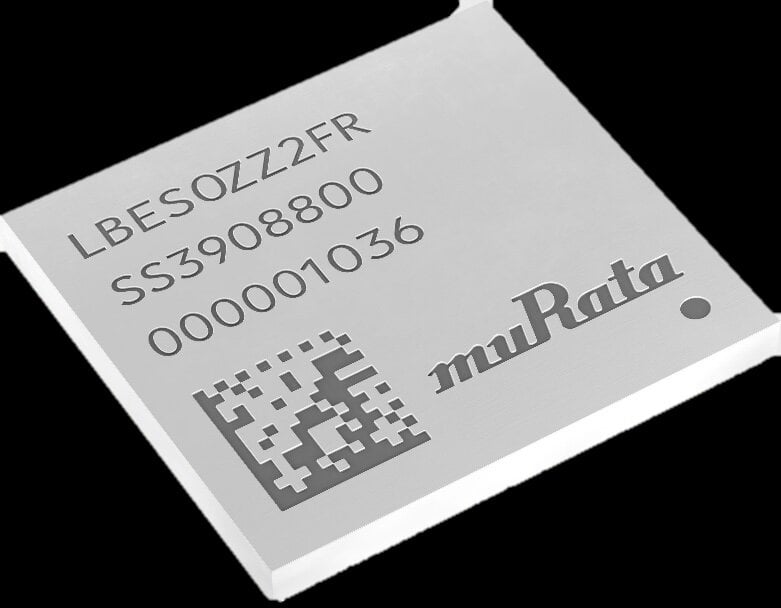
The integration of multiple wireless communication standards into single-package solutions facilitates the deployment of industrial IoT and edge computing devices. A recent hardware iteration addresses this requirement by combining dual-band Wi-Fi 6, Bluetooth LE 5.4, and IEEE 802.15.4 protocols into an ultra-compact land grid array format. This module supports automation equipment, smart building infrastructure, and machine-to-machine communication interfaces.
Hostless Architecture and Processing Capabilities
The Murata Type 2FR is structured around a hostless architecture powered by the NXP RW612 wireless microcontroller. Equipped with a 260 MHz Arm Cortex-M33 processor, 1.2 MB of SRAM, and 16 MB of integrated flash memory, the unit can execute applications directly without relying on an external host processor. This localized processing capability reduces printed circuit board complexity and limits the required bill of materials for original equipment manufacturers developing connected sensors, intelligent gateways, and human-machine interface systems.
Tri-Radio Connectivity and Network Interoperability
Utilizing a tri-radio configuration, the module operates across both 2.4 GHz and 5 GHz frequency bands. By concurrently supporting Wi-Fi 6, Bluetooth LE 5.4, and IEEE 802.15.4, the hardware enables native integration with modern IoT networking standards such as Thread, Ethernet, and Matter over Wi-Fi. This simultaneous protocol execution ensures interoperability across varied industrial networks. It allows field devices to maintain stable connections in high-density factory environments while managing power consumption through protocols like Bluetooth LE Long Range.
Hardware Security and Peripheral Interfaces
Security-critical industrial applications require robust hardware architectures to protect operational data. The module incorporates NXP EdgeLock, TrustZone-M, hardware root of trust, and secure boot mechanisms to authenticate firmware and secure data transmission against unauthorized access. For physical system integration, the module provides up to 64 general-purpose input/output pins. Peripheral connectivity options include USB 2.0 OTG, Ethernet, SPI, I²C, UART, and SDIO 3.0, alongside analog-to-digital and digital-to-analog conversion functionalities.
Physical Deployment Specifications
Designed to accommodate the physical constraints of edge computing hardware, the module measures 12.0 mm by 11.0 mm by 1.55 mm. The components are rated for an extended operating temperature range from -40 °C to +85 °C. This thermal tolerance is necessary for sustained deployment in unconditioned factory spaces, heavy industrial facilities, and demanding energy management systems.
Additional Context: This section details technical specifications and competitive benchmarking not included in the original product announcement.
The integration of tri-radio capabilities using the NXP RW612 silicon architecture marks a consolidation phase in wireless IoT hardware design. Historically, enabling concurrent Wi-Fi, Bluetooth, and 802.15.4 (Thread/Zigbee) communications required multi-chip configurations or discrete coprocessors, which occupied significantly larger board space and complicated radio frequency shielding. By converging these three transceivers and an application-class Cortex-M33 into a single 132-square-millimeter footprint, components like the Type 2FR offer a measurable reduction in PCB real estate compared to standard dual-module setups. Furthermore, embedded hardware support for the Matter protocol standardizes the application layer, resolving long-standing interoperability barriers between proprietary smart building systems and industrial automation networks without the need for external bridging hardware.
Edited by an industrial journalist, Lekshman Ramdas, with AI assistance.
www.rutronik.com
