
electronics-journal.com
29
'26
Written on Modified on
Electrical Protection Technologies for Renewable Energy Systems
Mersen showcases integrated surge protection, fuse technologies, and power management solutions for solar, energy storage, and EV charging infrastructure.
www.mersen.com
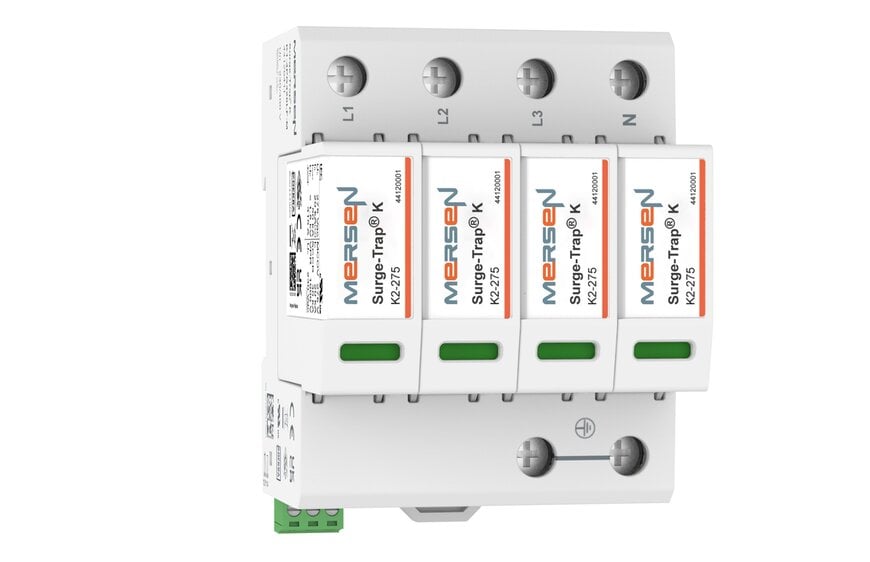
Surge-Trap® K is the next generation of surge protection devices that Mersen is presenting at Intersolar.
As renewable energy systems increase in scale and operating voltage, electrical protection requirements are becoming more demanding across solar power plants, battery energy storage systems (BESS), and electric vehicle charging infrastructure. At Intersolar Europe 2026, Mersen will present a portfolio of protection and power management technologies designed to address these evolving requirements while supporting higher-voltage renewable energy installations.
The technologies target utility-scale solar projects, energy storage facilities, EV charging networks, and power conversion systems, where reliable protection against overvoltage and overcurrent events is essential for system availability, safety, and operational efficiency.
Intersolar Europe 2026 Focuses on Renewable Energy Infrastructure
Mersen will exhibit at Intersolar Europe 2026, taking place from June 23–25, 2026, in Munich, Germany. The company will present technologies for photovoltaic systems, battery energy storage systems, and electric vehicle charging infrastructure at Hall B4, Booth 480.
As renewable energy deployment continues to accelerate, system operators are increasingly adopting higher-voltage architectures to improve energy transmission efficiency, reduce balance-of-system costs, and increase overall power density. These developments create new requirements for protection technologies capable of operating reliably under more demanding electrical conditions.
Surge Protection for High-Voltage Solar Installations
One of the key technologies being introduced is a Type 1+2 surge protective device developed for the AC side of large-scale photovoltaic installations operating at up to 1,000 VAC.
The device is designed to address the increasing use of high-power string inverters, which can deliver AC output voltages approaching 1,000 VAC. According to Mersen, the surge protection device provides an impulse discharge current rating (Iimp) of 12.5 kA and is engineered to withstand DC-induced voltage stresses that may occur within AC networks.
The system is also rated to tolerate surge events of up to 2.2 kV, helping protect electrical infrastructure from transient overvoltage conditions that can damage power conversion equipment, switchgear, and monitoring systems.
As solar installations continue to expand in capacity, surge protection becomes increasingly important for minimizing equipment downtime and reducing maintenance costs across distributed renewable energy assets.
DC Surge Protection for Battery Energy Storage Systems
Mersen will also present a surge protection solution specifically designed for battery energy storage systems.
The technology supports both centralized and distributed BESS architectures and has been validated for short-circuit withstand currents of up to 250 kA. The design is intended to meet IEC/EN 61643-41 requirements, a standard governing surge protective devices used in low-voltage DC applications.
Battery storage installations often operate with high DC voltages and significant fault-current potential, requiring protection systems capable of managing electrical disturbances while maintaining system reliability. By integrating DC surge protection and fuse technologies within a single solution, the design aims to simplify specification, procurement, and validation processes for system developers and integrators.
The solution complements Mersen's existing photovoltaic DC protection portfolio, extending protection coverage across both energy generation and energy storage environments.
Integrated Overcurrent and Overvoltage Protection Architecture
Renewable energy systems require protection against multiple electrical fault conditions, including overloads, short circuits, and transient overvoltage events.
Mersen's strategy combines overcurrent protection devices, surge protection technologies, and power management components within a unified ecosystem. Such integrated architectures can simplify compatibility considerations while supporting coordinated protection strategies across interconnected renewable energy assets.
This approach is increasingly relevant as solar plants, battery storage systems, and EV charging networks become more integrated within the broader digital supply chain supporting energy transition projects.
High-Voltage Fuse Technologies for Utility-Scale Solar Projects
The company will also showcase fuse and fuse-switch solutions designed for next-generation photovoltaic installations.
The HelioProtection® 1500 VDC product family provides string protection within photovoltaic combiner boxes, while NH fuse-switch disconnectors support AC-side protection at voltages up to 800 VAC.
A notable addition is a photovoltaic fuse series designed for operation at 2,000 VDC. According to Mersen, this represents the first commercially available photovoltaic fuse family developed specifically for 2,000 VDC applications.
Higher-voltage photovoltaic architectures can increase power transmission capability within solar arrays while reducing cabling requirements and associated installation costs. These characteristics are becoming increasingly important as developers pursue larger utility-scale projects with higher energy output targets.
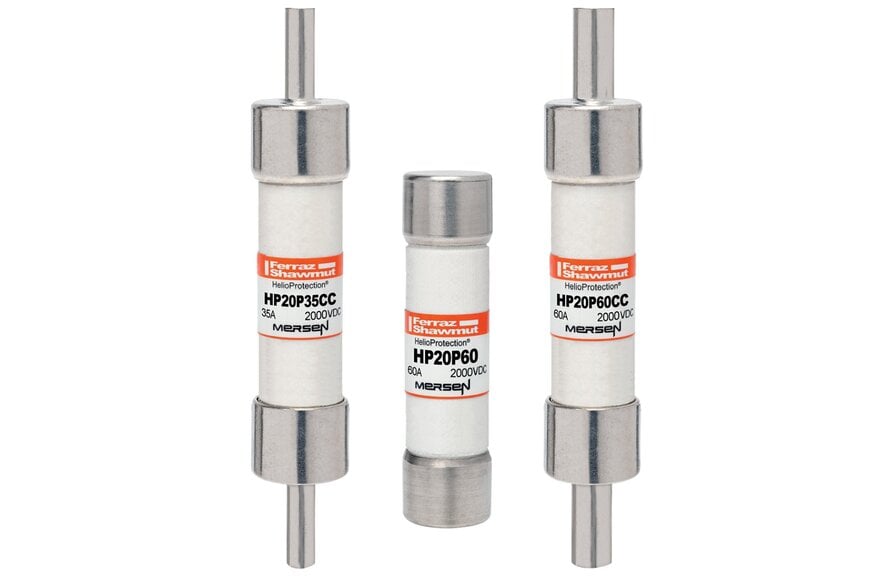
At Intersolar, Mersen will also showcase the smallest 2,000 VDC photovoltaic fuses currently available on the market.
Power Management Components for Electrification Applications
Beyond electrical protection, Mersen will present power management technologies designed for renewable energy and electrification systems.
The portfolio includes high-speed fuses, laminated busbars, cooling technologies, and capacitors used within power conversion and energy distribution equipment. These components contribute to electrical efficiency, thermal management, and power density optimization in applications such as solar inverters, battery storage systems, and EV charging stations.
For OEMs and system integrators, power management technologies play an important role in reducing system size, improving efficiency, and supporting the performance requirements of increasingly complex electrification infrastructure.
Renewable Energy Infrastructure and System Reliability
The expansion of renewable energy generation is driving the adoption of higher-voltage electrical architectures across solar, storage, and charging applications.
As operating voltages increase, protection technologies must evolve to manage greater electrical stresses while maintaining compliance with safety and reliability standards. Solutions that combine surge protection, overcurrent protection, and power management capabilities can help operators improve system resilience and reduce operational risks.
The technologies being demonstrated at Intersolar Europe 2026 reflect broader industry efforts to support larger renewable energy installations while addressing the technical challenges associated with higher-voltage power systems.
Additional Context
This section details technical specifications and competitive benchmarking not included in the original news release.
Mersen competes in the renewable energy protection market alongside suppliers such as Eaton, Siemens, Schneider Electric, ABB, Phoenix Contact, and Littelfuse. Common benchmark criteria in this sector include maximum operating voltage, impulse discharge current ratings, short-circuit withstand capability, compliance with IEC standards, environmental durability, and integration with solar and energy storage systems.
The AC surge protection device introduced by Mersen supports photovoltaic installations operating at up to 1,000 VAC and provides a Type 1+2 SPD configuration with an Iimp rating of 12.5 kA. The battery energy storage surge protection solution has been validated for short-circuit currents up to 250 kA and is designed around IEC/EN 61643-41 requirements. In photovoltaic protection, the 2,000 VDC fuse technology extends beyond the 1,500 VDC architectures commonly deployed in many utility-scale solar installations. These developments align with an industry-wide transition toward higher-voltage renewable energy infrastructure designed to improve efficiency, reduce installation complexity, and support increasing power-generation capacity.
Edited by Aishwarya Mambet, Induportals Editor, with AI assistance.
www.mersen.com
As renewable energy systems increase in scale and operating voltage, electrical protection requirements are becoming more demanding across solar power plants, battery energy storage systems (BESS), and electric vehicle charging infrastructure. At Intersolar Europe 2026, Mersen will present a portfolio of protection and power management technologies designed to address these evolving requirements while supporting higher-voltage renewable energy installations.
The technologies target utility-scale solar projects, energy storage facilities, EV charging networks, and power conversion systems, where reliable protection against overvoltage and overcurrent events is essential for system availability, safety, and operational efficiency.
Intersolar Europe 2026 Focuses on Renewable Energy Infrastructure
Mersen will exhibit at Intersolar Europe 2026, taking place from June 23–25, 2026, in Munich, Germany. The company will present technologies for photovoltaic systems, battery energy storage systems, and electric vehicle charging infrastructure at Hall B4, Booth 480.
As renewable energy deployment continues to accelerate, system operators are increasingly adopting higher-voltage architectures to improve energy transmission efficiency, reduce balance-of-system costs, and increase overall power density. These developments create new requirements for protection technologies capable of operating reliably under more demanding electrical conditions.
Surge Protection for High-Voltage Solar Installations
One of the key technologies being introduced is a Type 1+2 surge protective device developed for the AC side of large-scale photovoltaic installations operating at up to 1,000 VAC.
The device is designed to address the increasing use of high-power string inverters, which can deliver AC output voltages approaching 1,000 VAC. According to Mersen, the surge protection device provides an impulse discharge current rating (Iimp) of 12.5 kA and is engineered to withstand DC-induced voltage stresses that may occur within AC networks.
The system is also rated to tolerate surge events of up to 2.2 kV, helping protect electrical infrastructure from transient overvoltage conditions that can damage power conversion equipment, switchgear, and monitoring systems.
As solar installations continue to expand in capacity, surge protection becomes increasingly important for minimizing equipment downtime and reducing maintenance costs across distributed renewable energy assets.
DC Surge Protection for Battery Energy Storage Systems
Mersen will also present a surge protection solution specifically designed for battery energy storage systems.
The technology supports both centralized and distributed BESS architectures and has been validated for short-circuit withstand currents of up to 250 kA. The design is intended to meet IEC/EN 61643-41 requirements, a standard governing surge protective devices used in low-voltage DC applications.
Battery storage installations often operate with high DC voltages and significant fault-current potential, requiring protection systems capable of managing electrical disturbances while maintaining system reliability. By integrating DC surge protection and fuse technologies within a single solution, the design aims to simplify specification, procurement, and validation processes for system developers and integrators.
The solution complements Mersen's existing photovoltaic DC protection portfolio, extending protection coverage across both energy generation and energy storage environments.
Integrated Overcurrent and Overvoltage Protection Architecture
Renewable energy systems require protection against multiple electrical fault conditions, including overloads, short circuits, and transient overvoltage events.
Mersen's strategy combines overcurrent protection devices, surge protection technologies, and power management components within a unified ecosystem. Such integrated architectures can simplify compatibility considerations while supporting coordinated protection strategies across interconnected renewable energy assets.
This approach is increasingly relevant as solar plants, battery storage systems, and EV charging networks become more integrated within the broader digital supply chain supporting energy transition projects.
High-Voltage Fuse Technologies for Utility-Scale Solar Projects
The company will also showcase fuse and fuse-switch solutions designed for next-generation photovoltaic installations.
The HelioProtection® 1500 VDC product family provides string protection within photovoltaic combiner boxes, while NH fuse-switch disconnectors support AC-side protection at voltages up to 800 VAC.
A notable addition is a photovoltaic fuse series designed for operation at 2,000 VDC. According to Mersen, this represents the first commercially available photovoltaic fuse family developed specifically for 2,000 VDC applications.
Higher-voltage photovoltaic architectures can increase power transmission capability within solar arrays while reducing cabling requirements and associated installation costs. These characteristics are becoming increasingly important as developers pursue larger utility-scale projects with higher energy output targets.
At Intersolar, Mersen will also showcase the smallest 2,000 VDC photovoltaic fuses currently available on the market.
Power Management Components for Electrification Applications
Beyond electrical protection, Mersen will present power management technologies designed for renewable energy and electrification systems.
The portfolio includes high-speed fuses, laminated busbars, cooling technologies, and capacitors used within power conversion and energy distribution equipment. These components contribute to electrical efficiency, thermal management, and power density optimization in applications such as solar inverters, battery storage systems, and EV charging stations.
For OEMs and system integrators, power management technologies play an important role in reducing system size, improving efficiency, and supporting the performance requirements of increasingly complex electrification infrastructure.
Renewable Energy Infrastructure and System Reliability
The expansion of renewable energy generation is driving the adoption of higher-voltage electrical architectures across solar, storage, and charging applications.
As operating voltages increase, protection technologies must evolve to manage greater electrical stresses while maintaining compliance with safety and reliability standards. Solutions that combine surge protection, overcurrent protection, and power management capabilities can help operators improve system resilience and reduce operational risks.
The technologies being demonstrated at Intersolar Europe 2026 reflect broader industry efforts to support larger renewable energy installations while addressing the technical challenges associated with higher-voltage power systems.
Additional Context
This section details technical specifications and competitive benchmarking not included in the original news release.
Mersen competes in the renewable energy protection market alongside suppliers such as Eaton, Siemens, Schneider Electric, ABB, Phoenix Contact, and Littelfuse. Common benchmark criteria in this sector include maximum operating voltage, impulse discharge current ratings, short-circuit withstand capability, compliance with IEC standards, environmental durability, and integration with solar and energy storage systems.
The AC surge protection device introduced by Mersen supports photovoltaic installations operating at up to 1,000 VAC and provides a Type 1+2 SPD configuration with an Iimp rating of 12.5 kA. The battery energy storage surge protection solution has been validated for short-circuit currents up to 250 kA and is designed around IEC/EN 61643-41 requirements. In photovoltaic protection, the 2,000 VDC fuse technology extends beyond the 1,500 VDC architectures commonly deployed in many utility-scale solar installations. These developments align with an industry-wide transition toward higher-voltage renewable energy infrastructure designed to improve efficiency, reduce installation complexity, and support increasing power-generation capacity.
Edited by Aishwarya Mambet, Induportals Editor, with AI assistance.
www.mersen.com
