
electronics-journal.com
01
'26
Written on Modified on
Radiation-Hardened Semiconductors for Space Telescopes
Infineon provides radiation-resistant power infrastructure for the NASA Roman Space Telescope to ensure stable energy distribution at the second Sun-Earth Lagrange point.
www.infineon.com
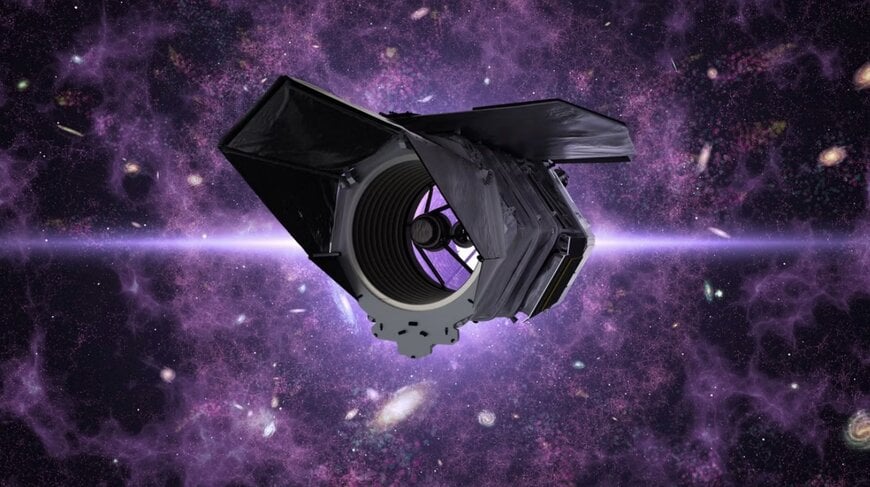
Infineon Technologies AG and NASA have deployed radiation-hardened power semiconductor components aboard the Nancy Grace Roman Space Telescope. The hardware integration provides continuous electrical power delivery for high-volume astrophysics data processing in deep space environments.
Environmental Challenges and Cooperative Roles
The Nancy Grace Roman Space Telescope requires stable power to downlink approximately 1.4 terabytes of raw science data daily to ground stations in New Mexico, Australia, and Japan. Operating at the second Sun-Earth Lagrange point (L2), located 1.5 million kilometers from Earth, the observatory is exposed to a high-energy particle environment outside the Earth's protective magnetic field. Because physical maintenance is impossible at this orbital distance, NASA required aerospace power systems capable of sustaining continuous operation for a ten-year mission lifespan. Infineon supplied the high-reliability power management hardware to withstand this radiation environment.
Technical Solution and System Architecture
The integrated solution utilizes a semiconductor architecture engineered specifically to resist radiation degradation at the component level, rather than relying on passive physical shielding. The electrical infrastructure includes radiation-hardened silicon power MOSFETs, gallium nitride (GaN) transistors, gate drivers, and solid-state relays. These components undergo characterization for Total Ionizing Dose (TID) and Single Event Effects (SEE) to meet MIL-PRF military performance standards. Specifically, the system utilizes a JANS-qualified 100 V GaN transistor, tested to MIL-PRF-19500 specifications, which accommodates higher switching frequencies and elevated power density compared to legacy silicon alternatives.
Deployment and Hardware Integration
The hardware was launched aboard the observatory from the Kennedy Space Center in Florida and is transiting to the L2 orbital position. Infineon managed the internal fabrication and baseline radiation testing of the semiconductors prior to their integration into the telescope's power distribution matrix. During the operational phase, these devices will regulate the continuous current required by the telescope’s primary scientific instruments and telemetry systems.
Applications and Expected Operational Impact
In space observatory applications, minimizing spacecraft mass is a primary engineering constraint. The application of GaN-based semiconductor technology reduces electrical switching losses and decreases the required size of associated magnetic components. This mechanism delivers measurable volume and weight savings at the system level. Addressing the operational parameters, Mike Mills, Senior Vice President and General Manager HiRel at Infineon, noted, "Roman will operate at L2 for up to a decade with no possibility of maintenance or servicing. At that distance, in that radiation environment, power technology has to work flawlessly from day one and keep working."
Edited by Aishwarya Mambet, Induportals Editor, with AI assistance.
www.infineon.com
