
electronics-journal.com
02
'26
Written on Modified on
Power Semiconductor Integration for Next-Generation Electrified Vehicle Powertrains
Nexperia and Aurobay Technologies collaborate to integrate wide-bandgap semiconductors into high-efficiency propulsion platforms for hybrid and electric automotive systems.
www.nexperia.com
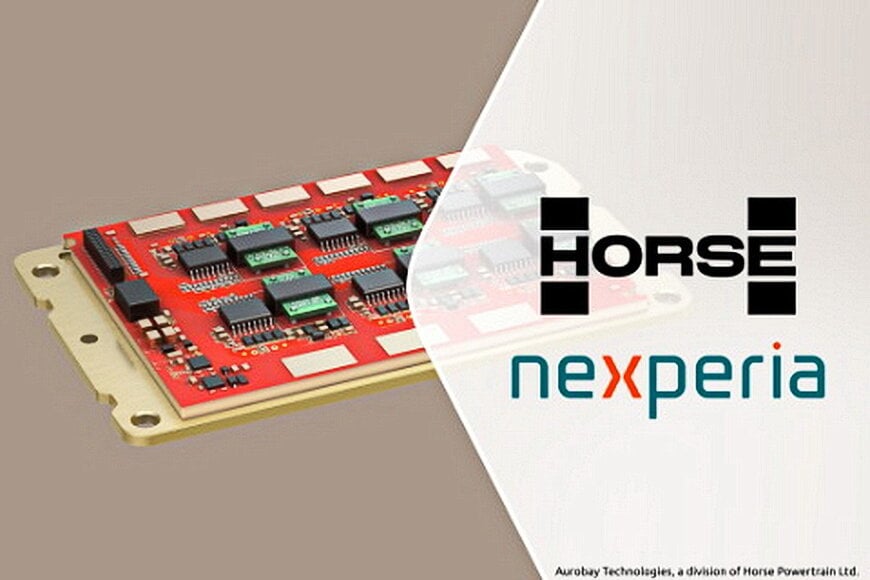
Aurobay Technologies and Nexperia have entered into a strategic collaboration to develop and implement wide-bandgap power semiconductor solutions for hybrid and electric vehicle powertrains. The initiative focuses on integrating gallium nitride and silicon carbide devices directly into high-voltage automotive propulsion systems.
Operational Context and Industrial Challenge
Electrified powertrain architectures require higher power density, reduced physical volume, and minimal thermal dissipation to maximize vehicle operating range and electrical efficiency. Traditional silicon-based switching devices encounter operational limits at higher switching frequencies and elevated temperatures. Addressing these thermal and electrical bottlenecks requires the implementation of wide-bandgap materials that support high-frequency switching with reduced conduction and switching losses, coupled with mechanical and electrical co-design at the system level.
Partner Roles and Technical Responsibilities
The partnership divides development according to the core technical proficiencies of each organization:
- Nexperia provides wide-bandgap power semiconductor expertise, supplying gallium nitride (GaN) and silicon carbide (SiC) components engineered for low resistance, thermal conductivity, and high switching speeds.
- Aurobay Technologies, an operating unit of Horse Powertrain Limited, directs powertrain engineering, high-voltage system architecture, packaging, and vehicle-level validation.
The engineering framework utilizes an early-stage co-design methodology. This approach allows semiconductor switching characteristics, package parasitics, and thermal interfaces to be modeled and optimized concurrently with the inverter circuitry and mechanical packaging of the powertrain.
Application Areas and Deployment Architecture
The joint development targets high-voltage automotive systems across electric and hybrid propulsion architectures:
Application Areas and Deployment Architecture
The joint development targets high-voltage automotive systems across electric and hybrid propulsion architectures:
- Range-extender power generation units, utilizing GaN switching devices to maximize generator inverter efficiency and minimize unit mass.
- Primary traction inverters, applying SiC and GaN topologies to reduce switching energy losses and overall volume in main drive units.
This collaboration expands upon prior operational validation where Nexperia GaN devices were integrated into an Aurobay range-extender power generation assembly. Physical testing verified that wide-bandgap implementation reduced overall assembly dimensions and mass while sustaining required electrical output under automotive operating parameters.
System Impact and Performance Objectives
Through synchronized semiconductor packaging and powertrain layout design, the initiative targets higher power conversion efficiency and reduced parasitic inductance. Decreased thermal loads reduce heat-sink sizing and cooling system requirements, resulting in gravimetric and volumetric efficiency gains across the entire electric propulsion assembly.
Edited by Evgeny Churilov, Induportals Media - Adapted by AI.
www.nexperia.com
System Impact and Performance Objectives
Through synchronized semiconductor packaging and powertrain layout design, the initiative targets higher power conversion efficiency and reduced parasitic inductance. Decreased thermal loads reduce heat-sink sizing and cooling system requirements, resulting in gravimetric and volumetric efficiency gains across the entire electric propulsion assembly.
Edited by Evgeny Churilov, Induportals Media - Adapted by AI.
www.nexperia.com
