
electronics-journal.com
02
'26
Written on Modified on
TI expands Zephyr RTOS support across its embedded hardware portfolio
Unified Zephyr platform supports TI MCUs, MPUs and wireless devices, enabling code portability, security updates and streamlined development across hardware.
www.ti.com
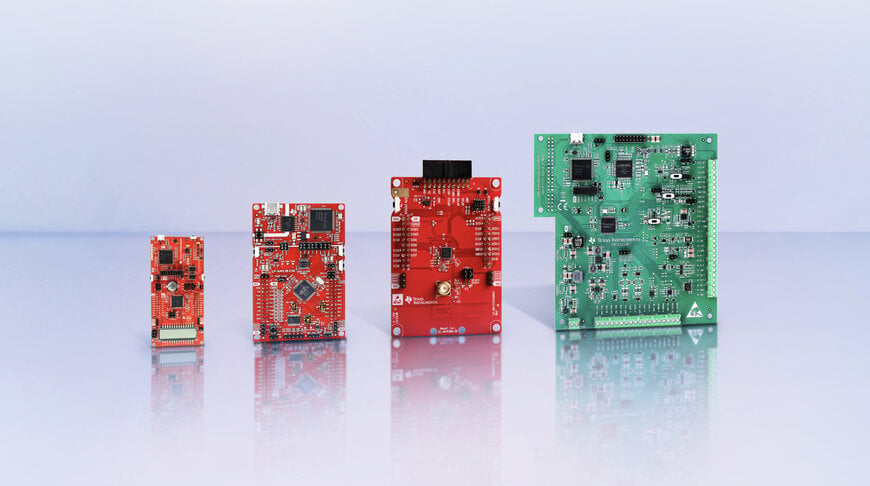
Embedded software development teams face persistent engineering friction when switching silicon platforms, often forced to rewrite board support packages, peripheral abstraction layers, and application drivers to suit proprietary vendor toolchains. Texas Instruments addressed this software fragmentation by announcing broad embedded hardware support within the Zephyr Project, a collaborative open-source real-time operating system governed by the Linux Foundation. The integration establishes an upstream-first, production-ready runtime environment across the company’s microcontrollers (MCUs), microprocessors (MPUs), and wireless transceiver portfolios, removing architectural lock-in for connected industrial and edge computing systems.
Upstream Development Architecture and Codebase Portability
Migrating embedded code between differing processor core architectures typically introduces regressions, driver incompatibilities, and timing offsets. In conventional workflows, porting an edge node from an ultra-low-power sensing microcontroller to an industrial-grade microprocessor requires re-architecting underlying task schedulers, memory management interfaces, and software development kits (SDKs).
The Zephyr RTOS integration resolves this by delivering a vendor-neutral software layer that decouples application code from underlying silicon registers. Developers write firmware against Zephyr’s standardized application programming interfaces (APIs), hardware models, and device-tree configurations. Because Texas Instruments contributes drivers and reference hardware designs directly upstream to the Zephyr Project, codebases undergo community review and continuous integration testing before downstream software development kit packaging. This eliminates workflow disruption, allowing engineering teams to retain existing toolchains, continuous deployment pipelines, and RTOS configurations when transitioning between processing tiers.
Regulatory Compliance and Product Lifecycle Verification
Tightening international cybersecurity frameworks require hardware and software vendors to guarantee deterministic lifecycle security. The integration directly targets the European Union’s Cyber Resilience Act (CRA), which mandates vulnerability monitoring, software bills of materials (SBOMs), and coordinated disclosure timelines for connected digital products.
Through public GitHub repository tracking, continuous integration and continuous deployment (CI/CD) pipelines, and long-term upstream kernel maintenance from the Linux Foundation, the platform delivers verifiable software validation. Texas Instruments couples regular Zephyr SDK security updates with manufacturing commitments supporting device operational lifecycles beyond 10 years. This provides developers targeting regulated industrial and European edge deployments with audit-ready patch trees, backward-compatible migration paths, and validated RTOS images.
Additional Context:
This section details technical specifications and competitive benchmarking not included in the original product announcement.
Zephyr RTOS features a modular microkernel design with a configurable memory footprint scaling down to under 8 to 10 kilobytes of random-access memory (RAM) and read-only memory (ROM) on memory-constrained Cortex-M0+ microcontrollers, while providing memory protection unit (MPU) management, multi-threading, and POSIX API subsets for 32-bit and 64-bit application processors. For wireless connectivity, Zephyr incorporates fully open, certified Bluetooth Low Energy (BLE) software stacks, OpenThread mesh protocols, and standardized IP networking stacks (IPv4/IPv6 over 6LoWPAN) natively integrated into the kernel build system (CMake/Kconfig). Automated regression testing is handled via Zephyr’s Twister test runner, executing hardware-in-the-loop (HIL) validation across physical target boards.
In the embedded RTOS sector, Zephyr competes alongside FreeRTOS (maintained by Amazon Web Services) and Microsoft Azure RTOS (ThreadX, transitioning through the Eclipse Foundation). While FreeRTOS maintains a widespread footprint across industrial devices due to its compact scheduler, it lacks an integrated device driver model, native multi-protocol wireless stacks, and centralized hardware abstraction, requiring silicon vendors to write and maintain disparate software packages. Silicon competitors—including Nordic Semiconductor with its nRF Connect SDK built natively on Zephyr, NXP Semiconductors with Zephyr board packages for its MCX and i.MX RT processors, and STMicroelectronics with STM32 Zephyr integration—have established strong open-source development workflows. The broad commitment by Texas Instruments across diverse architectures—encompassing MSPM0 Cortex-M0+ devices, C2000 real-time controllers, SimpleLink wireless SoCs, and Sitara MPUs—establishes parity with specialized IoT chipmakers while providing industrial developers an upstream-first compliance baseline for IEC 62443 industrial automation cybersecurity and European CRA certification frameworks.
Edited by Natania Lyngdoh, Induportals editor, with AI assistance.
www.ti.com
