
electronics-journal.com
27
'26
Written on Modified on
Gallium Nitride Bidirectional Switches for Digital Infrastructure Power Distribution
Infineon and Enphase Energy are collaborating to implement 900-volt monolithic components into solid-state transformers for data center power architectures.
www.infineon.com
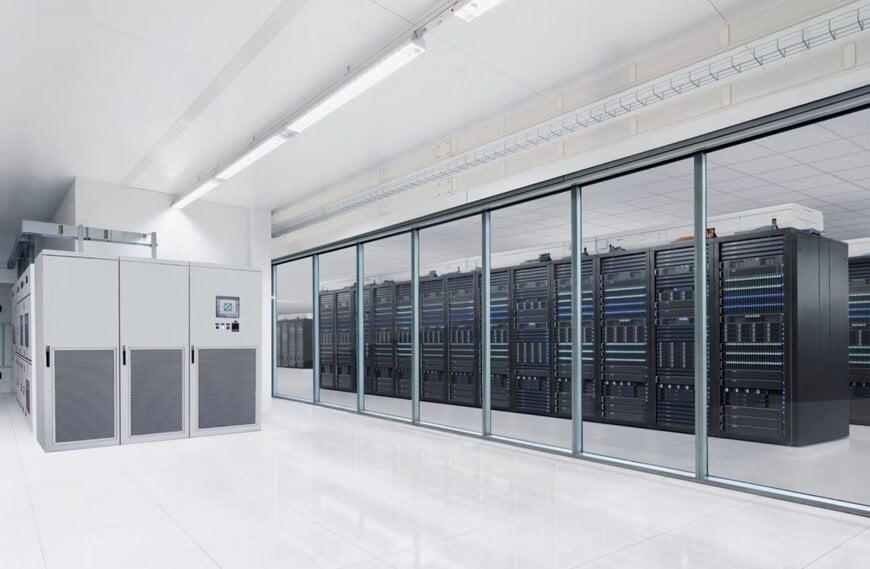
Infineon Technologies AG and Enphase Energy, Inc. are collaborating to deploy 900-volt gallium nitride (GaN) monolithic bidirectional switches (BDS) within solid-state transformer (SST) modules. This cooperative engineering effort targets high-voltage power conversion systems utilized in digital infrastructure, specifically addressing energy distribution within artificial intelligence data centers and commercial solar installations.
Operational Challenges and Partner Roles
Next-generation power distribution architectures require elevated efficiency and power density to manage the thermal and spatial constraints of high-performance computing facilities. Historically, silicon carbide (SiC) has dominated high-voltage power conversion. However, achieving higher frequency operation requires advanced material integration. To address this technical challenge, Enphase Energy leads the system-level engineering and demonstration of the SST modules, while Infineon provides the core GaN device technology and foundational engineering support.
Technical Solution and Responsibilities
The technical solution centers on the 900 V GaN monolithic BDS technology. Unlike conventional power switches that require multiple discrete components to manage energy flow, the monolithic architecture integrates bidirectional voltage blocking and current conduction into a single semiconductor device. Infineon is responsible for manufacturing the semiconductor components to maintain high-frequency switching characteristics at 900 V. Enphase integrates these switches into its SST power modules, configuring the hardware to support simpler power stages. This high-frequency capability directly reduces the required size of associated magnetic components in the circuitry.
Deployment and Implementation
The GaN BDS devices are undergoing integration and testing within the SST product development pipeline at Enphase. The hardware replaces earlier 650 V configurations, providing increased voltage headroom for megawatt-scale systems. The companies are preparing the integrated modules for production qualification, transitioning the prototypes into commercial power paths designed for three-phase, 480 V line-to-line applications in the United States and 400 V standards internationally.
Applications, Use Cases, and Impact
The primary application for this technology is AI data center power distribution, where power density directly impacts facility scalability. By increasing the blocking voltage to 900 V, the devices enable engineers to eliminate intermediate power conversion stages. This mechanism reduces the total component count in the power path, which decreases electrical losses and improves overall system reliability. Furthermore, the architecture supports the broader industrial transition toward 800 V and 1,500 VDC power distribution standards.
Addressing the operational impact of the higher voltage threshold, Hans van Antwerpen, Senior Vice President and Chief Technology Officer at Enphase Energy, stated: "Moving to 900 V gives us more voltage headroom while retaining the benefits of high-frequency switching. It allows us to remove converter stages from the system and reduce the number of components in the power path, which translates to higher efficiency, higher power density and improved system reliability.”
Edited by Aishwarya Mambet, Induportals Editor, with AI assistance.
www.infineon.com
