
electronics-journal.com
19
'25
Written on Modified on
High-Capacity DDR5 Memory Certified for Intel Servers
SK hynix completes Intel Data Center certification for its 256 GB DDR5 RDIMM, enabling higher performance and efficiency in data center environments with Intel Xeon 6 processors.
www.skhynix.com
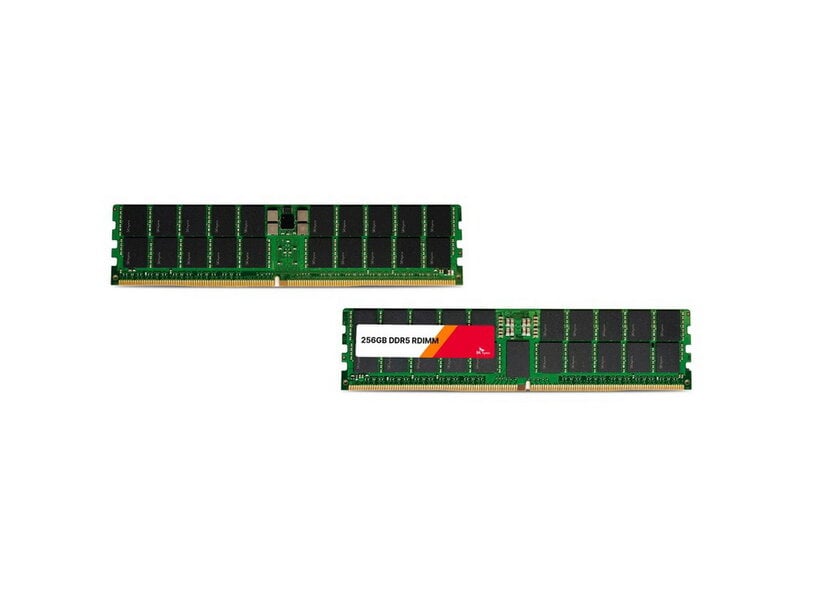
SK hynix has achieved industry firsts in validating a high-capacity 256 GB DDR5 RDIMM server memory module built on 32 Gb fifth-generation 10 nm-class (1b) DRAM for use with Intel Xeon 6 processors, delivering measurable gains in memory performance and power efficiency for server and data center applications. The certification confirms compatibility and quality on Intel’s latest server platform and addresses growing demand in digital supply chains and AI-centric workloads.
Certified Compatibility with Intel Xeon 6 Platforms
The 256 GB Registered Dual In-Line Memory Module (RDIMM) has completed the Intel Data Center Certified process at Intel’s Advanced Data Center Development Laboratory, marking it as the first server memory module of its capacity and architecture verified for reliable performance, compatibility, and quality with Intel Xeon 6 processor platforms. RDIMM modules incorporate a register or buffer between the processor memory controller and DRAM chips to improve signal integrity and support larger memory capacities typical of server use cases.
SK hynix previously secured a similar validation in January 2025 for a 256 GB module using earlier-generation 16 Gb DRAM dies, indicating sustained progress in high-density DDR5 module development.
Technical Improvements and Performance Metrics
The new RDIMM leverages 32 Gb DRAM chips fabricated on SK hynix’s fifth-generation 10 nm-class (1b) process node. Compared with server systems that use 32 Gb die-based 128 GB memory modules, servers equipped with the 256 GB RDIMM demonstrate up to 16 percent higher AI inference performance, an important metric for workloads dependent on memory bandwidth and size, including real-time analytics and machine learning inference.
From an efficiency standpoint, the design yields roughly 18 percent lower power consumption relative to previous 256 GB modules built with 16 Gb DRAM chips on fourth-generation 10 nm-class (1a) technology. This reduction improves the overall performance per watt, a key consideration for large-scale data center operations where power and cooling represent significant operating costs.
Implications for Data Center and AI Workloads
In modern AI and enterprise environments, memory capacity and performance directly influence system throughput and task completion times. As inference models advance beyond simple pattern recognition to more complex logic operations, the consequent rise in data volume and memory bandwidth demands reinforces the importance of high-capacity DDR5 modules in server architectures. High-capacity RDIMMs enable larger working datasets in memory without frequent offload to slower storage tiers, thereby reducing latency and improving overall system efficiency.
The adoption of such modules also supports scalability in digital supply chain infrastructures, where servers must accommodate expanding datasets across distributed computing resources while maintaining compatibility with standard server platforms such as Intel Xeon 6.
Industry and Market Context
By achieving the first Intel Data Center certification for a 256 GB DDR5 RDIMM based on 32 Gb DRAM, SK hynix underscores its capability in high-density memory design and positions itself to meet the escalating memory requirements of cloud providers, hyperscale data centers, and enterprises deploying AI at scale. Broader collaboration with global data center operators is expected as part of efforts to address rapidly increasing demand for high-performance, low-power memory solutions.
This milestone reflects incremental evolution in server memory technologies rather than a standalone product launch; comparable high-capacity DDR5 modules from other suppliers must similarly satisfy rigorous platform certification criteria, typically defined by processor and server OEM validation programs.
www.skhynix.com
