
electronics-journal.com
06
'26
Written on Modified on
Texas Instruments Accelerates Next Generation Physical AI with NVIDIA Collaboration
Texas Instruments integrates mmWave radar with NVIDIA Jetson Thor to enhance humanoid robot safety, enabling low-latency 3D perception and reliable navigation in complex environments.
www.ti.com
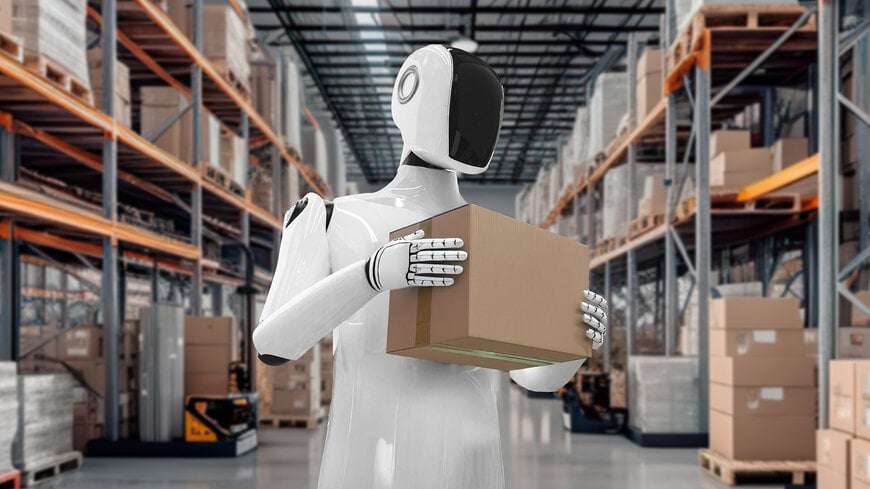
The successful deployment of humanoid robots in real-world environments depends on the seamless integration of high-performance computing with precise mechanical control and environmental sensing. While many AI solutions focus primarily on central processing power, the collaboration between Texas Instruments (TI) and NVIDIA addresses the critical hardware gap between virtual simulation and physical execution. By linking TI’s real-time motor control and sensing portfolios with the NVIDIA Jetson Thor platform, developers can achieve a level of deterministic safety and operational reliability that sets this architecture apart from standard robotic compute solutions.
Bridging the Gap Between Simulation and Real-World Actuation
A primary challenge in robotics is ensuring that the complex decisions made by an AI model translate accurately into physical movement. This architecture differentiates itself by providing a complete functional safety-capable foundation. While competing platforms often struggle with the latency between sensing an object and reacting to it, the integration of TI’s real-time technologies ensures that every joint and subsystem in a humanoid robot operates with synchronized precision. This allows developers to validate perception and actuation much earlier in the design cycle, accelerating the transition from digital prototypes to commercially viable machines.
Superior 3D Perception Through Sensor Fusion
One of the most significant technological advantages of this collaboration is the use of mmWave radar to augment traditional camera-based vision. In many industrial and commercial settings, cameras are limited by environmental factors such as low light, heavy dust, or reflective surfaces like glass doors. By integrating TI’s IWR6243 mmWave radar with NVIDIA Holoscan via an Ethernet-based sensing bridge, the system achieves low-latency 3D perception. This sensor fusion approach significantly reduces false positives and ensures that robots can navigate safely in unpredictable conditions where vision-only systems might fail.
Optimized Power Management and Edge Processing
Beyond movement and vision, the physical AI requirements of the next generation demand highly efficient power management to support extended operation. The collaboration utilizes TI’s power and analog expertise to manage the high energy demands of NVIDIA’s advanced GPU compute at the edge. This tight integration of networking, sensing, and processing allows for real-time decision-making without the need for constant cloud connectivity. By focusing on the "edge of the edge," this hardware synergy provides a scalable path for deploying humanoid robots that are not only smarter but also safer and more efficient than previous generations of autonomous systems.
www.ti.com
