
electronics-journal.com
01
'26
Written on Modified on
Multi-OS Support for ARM Embedded Systems
Tria Technologies extends Qualcomm-based platforms with Yocto Linux, Windows 11 IoT, and Android to increase flexibility in embedded system design.
www.tria-technologies.com
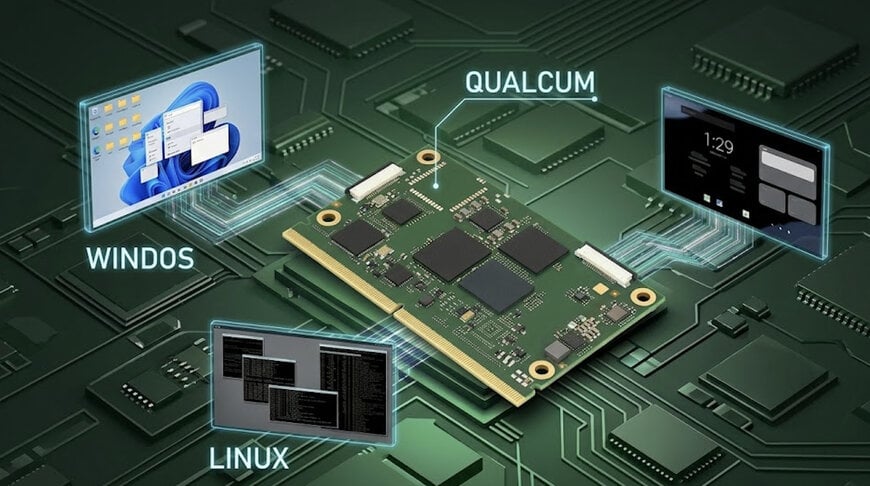
Tria Technologies has expanded operating system compatibility across its Qualcomm-based embedded computing portfolio, enabling deployment of Yocto Linux, Windows 11 IoT, and Android on a unified ARM hardware platform. The development targets industrial and embedded applications requiring long lifecycle support, energy efficiency, and software flexibility.
Expanding software flexibility in embedded architectures
Embedded systems in sectors such as industrial automation, robotics, and energy increasingly require adaptable software environments to support diverse application requirements. By enabling multiple operating systems on a single hardware architecture, Tria reduces the need for platform-specific redesign and simplifies system integration.
The approach supports a broader embedded computing ecosystem, where developers can select operating systems based on performance constraints, user interface needs, or software compatibility, without changing the underlying hardware design.
Yocto Linux with long-term maintainability
The Yocto-based Linux offering is built on Qualcomm Linux 1.7 as a Board Support Package and integrates the Linux 6.6 LTS kernel. The system is developed using the Yocto Scarthgap framework alongside the MSC LDK toolchain, enabling full customization of the software stack.
Alignment with an upstream long-term support kernel ensures continuous access to security patches and facilitates vulnerability management. This is particularly relevant for compliance with regulatory frameworks such as the Cyber Resilience Act, where maintainability and security lifecycle management are critical.
Yocto Linux remains widely used in industrial embedded systems due to its modular architecture and ability to generate tailored distributions optimized for specific hardware and application constraints.
Windows 11 IoT on ARM for industrial migration
Tria’s support for Windows 11 IoT on ARM introduces an alternative to traditional x86-based embedded systems. The implementation leverages Qualcomm’s UEFI bootloader and includes compatibility with AMI UEFI firmware, enabling features such as NVMe boot support.
This development allows existing Windows-based applications to transition to ARM platforms without requiring extensive modification, while benefiting from reduced power consumption and lower system costs. It also reflects a broader shift toward ARM architectures in embedded and industrial environments.
Android for industrial and field applications
In addition to existing Android 13 support, Tria plans to introduce Android 16 compatibility by the fourth quarter of 2026. The platform targets use cases requiring robust user interfaces and mobile-derived capabilities, including rugged tablets, field service devices, and industrial handheld systems.
Android’s ecosystem provides access to a wide range of interfaces and application frameworks, which are increasingly relevant in environments such as oil and gas operations, robotics, and other harsh industrial conditions. Native support for Tria’s hardware interfaces ensures integration across these use cases.
Toward a unified embedded software platform
By supporting multiple operating systems on Qualcomm-based ARM platforms, Tria positions its portfolio as a flexible foundation for embedded system development. The ability to deploy Linux, Windows, or Android on the same hardware reduces fragmentation in system design and accelerates time-to-market.
This multi-OS strategy aligns with broader trends in embedded computing, where hardware standardization and software portability are key to managing complexity across the digital supply chain.
Edited by an industrial journalist Sucithra Mani with AI assistance.
www.tria-technologies.com
