
electronics-journal.com
03
'26
Written on Modified on
Coherent Transceivers for Ultra-Long-Haul Optical Backbone Networks
ProLabs develops 400G and 800G pluggable modules to extend coherent signal transmission across 2,400 kilometers for national telecommunications infrastructure.
www.protolabs.com
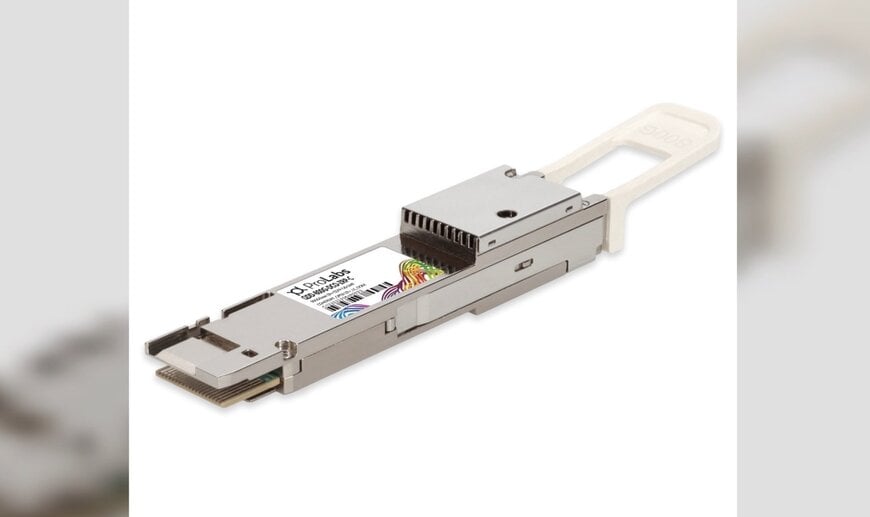
ProLabs is releasing the QSFP-DD 800G ZR LH and QSFP-DD 400G ZR ULH coherent transceivers designed for carriers, service providers, and large-scale backbone network operators. This hardware facilitates ultra-long-haul optical transmission across national and cross-continental infrastructure, enabling high-bandwidth connectivity within the global telecommunications data ecosystem.
Maximizing Existing Fiber Infrastructure
As network traffic demands increase, telecommunication operators seek to maximize the capacity of existing long-haul fiber optic infrastructure rather than deploying new cables. Standard 400G optical solutions typically support coherent transmission for approximately six repeater hops. The newly engineered long-haul (LH) and ultra-long-haul (ULH) transceivers extend this range to support up to 30 repeater hops. This extension equates to a continuous transmission distance of roughly 2,400 kilometers without requiring signal regeneration, directly lowering the capital and operational expenditure associated with installing additional intermediary hardware.
Digital Signal Processing and Modulation Integration
To maintain data integrity over extensive subsea and terrestrial links, the transceivers combine advanced optical modulation techniques with integrated digital signal processing (DSP). This built-in processing capability continuously compensates for chromatic dispersion and laser detuning at each repeater station across the fiber route. Because the hardware is compatible with standard QSFP-DD ports, operators can deploy the transceivers within existing platforms, allowing for long-haul network upgrades with minimal structural changes to existing routing and switching equipment. Stefan Löhmann, EMEA Sales Director, notes that this standards-based architecture provides an open, interoperable alternative to proprietary optical networking hardware.
Additional Context
This section details technical specifications and competitive benchmarking not included in the original news release.
In the coherent optical networking sector, 400G and 800G ZR/ZR+ transceivers compete directly with proprietary optical transport network (OTN) line cards and pluggable modules from manufacturers such as Cisco (Acacia), Coherent Corp, and Marvell. Standard 400G ZR modules, governed by the Optical Internetworking Forum (OIF), are traditionally limited to 80-to-120-kilometer distances specifically for edge or data center interconnects (DCI). By utilizing higher-performance DSPs and alternative modulation formats such as DP-QPSK (Dual Polarization Quadrature Phase Shift Keying), ultra-long-haul (ULH) pluggable modules bypass these limits to reach multi-thousand-kilometer distances over Erbium-Doped Fiber Amplifier (EDFA) networks. Reaching 30 optical hops within a standard QSFP-DD form factor aligns with the industry's shift toward IP-over-DWDM (Dense Wavelength Division Multiplexing), where high-transmit-power pluggables are directly replacing standalone optical transponders to conserve rack space and power.
Edited by Aishwarya Mambet, Induportals Editor, with AI assistance.
www.prolabs.com
