
electronics-journal.com
15
'26
Written on Modified on
Motor Control IC Integrates MCU and MOSFETs for Automotive Systems
Toshiba introduces an integrated motor control device designed to reduce component count in small automotive motor applications.
www.global.toshiba
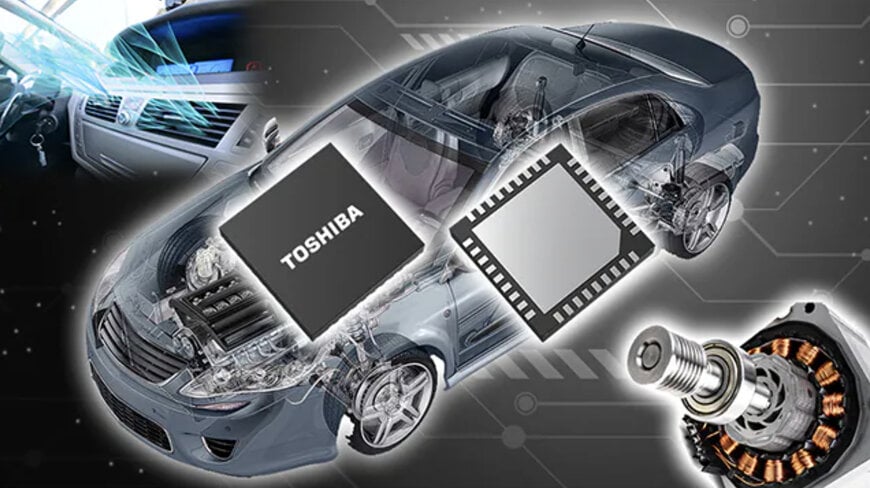
Toshiba Electronic Devices & Storage Corporation has started shipping engineering samples of the TB9M040FTG, a motor control device integrating a microcontroller, power MOSFETs and motor driver functions into a single package. The device targets automotive applications using small three-phase brushless DC motors, including HVAC dampers, electric valves and grille shutters, where compact electronic control units (ECUs) and advanced motor control are increasingly required.
Integrated Architecture for Automotive Motor Control
The TB9M040FTG combines a 32-bit Arm Cortex-M23 microcontroller operating at 40 MHz, flash memory, a three-phase brushless DC motor driver with integrated MOSFETs, a high-side driver, LIN transceiver and power supply circuitry within a 6 × 6 mm VQFN36 package. This integration enables direct drive of three-phase brushless DC motors without requiring separate external driver ICs.
The device incorporates 80 KB of code flash memory and 4 KB SRAM with built-in ECC supporting single-error correction and double-error detection. Toshiba states that integrating these functions into a single package can reduce ECU size and lower component counts in automotive systems.
Field-Oriented Control Hardware Reduces Processor Load
A built-in Vector Engine and programmable motor driver hardware accelerate field-oriented control (FOC), a vector control method used to independently regulate motor torque and magnetic flux. Hardware-assisted FOC can reduce MCU processing requirements and software complexity compared with implementations relying entirely on software execution.
The device also includes a 1-shunt current sensing amplifier, 12-bit analog-to-digital converter and encoder input circuitry supporting motor position and speed detection. These functions contribute to motor control accuracy in variable operating conditions.
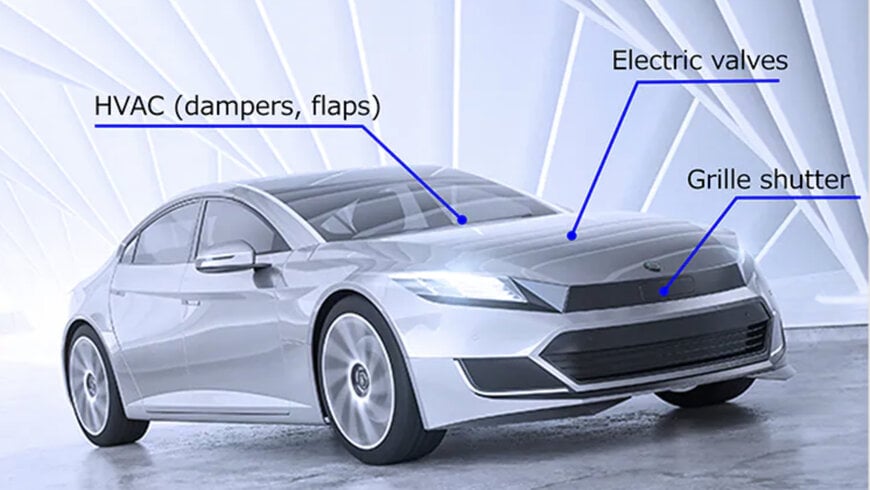
Figure 1. Major application locations of small automotive three‑phase brushless DC motors
Sensorless Motor Operation and Communication Interfaces
The TB9M040FTG features back electromotive force (BEMF) detection, enabling sensorless square-wave control without requiring dedicated position sensors. Eliminating external sensors may reduce system complexity and component costs in some automotive motor applications.
Communication interfaces include LIN, UART and SPI. The integrated LIN transceiver supports communication between ECUs and peripheral automotive subsystems, commonly used in applications such as climate control actuators and grille shutter mechanisms.
Automotive Qualification and Operating Conditions
The IC is compliant with AEC-Q100 Grade 0, an automotive qualification standard for integrated circuits supporting operation at elevated temperatures. Toshiba specifies operating ambient temperatures from -40°C to +150°C and junction temperatures up to +175°C. The device is also designed to meet ASIL-B functional safety requirements under ISO 26262.
The motor driver supports one-channel three-phase brushless DC motor operation up to 2 A and operates across automotive battery voltages from 6 V to 18 V. Protection functions include undervoltage, overvoltage, overcurrent, drain-source voltage monitoring and thermal shutdown detection.
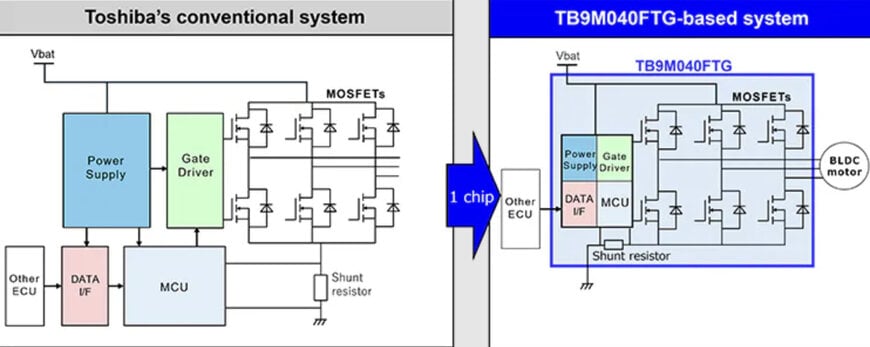
Figure 2. Motor control system based on TB9M040FTG
Applications in Automotive Electrification
Increasing electrification of vehicle subsystems has expanded demand for compact motor control solutions capable of supporting distributed actuators. The TB9M040FTG is intended for applications including HVAC flaps, dampers, electric valves and active grille shutters, where compact form factors and reduced ECU complexity are relevant design considerations.
Additional Context: This section details technical specifications and competitive benchmarking not included in the original product announcement
Integrated motor control ICs for automotive brushless DC motors are commonly evaluated using safety qualification levels, operating temperature range, communication support and degree of hardware integration. Comparable products exist from manufacturers including Infineon Technologies and NXP Semiconductors, which offer automotive motor control ICs with integrated drivers and safety features. However, direct benchmarking requires equivalent published specifications across parameters such as ASIL level, AEC qualification grade, operating temperature and integrated control architecture.
The TB9M040FTG combines AEC-Q100 Grade 0 qualification, ASIL-B compliance, integrated MOSFETs, hardware-assisted FOC and LIN communication in a 6 × 6 mm package. Because competing solutions frequently differ in target power range, motor type and integration level, objective one-to-one performance comparisons are not consistently available from published datasets. Under the stated criteria, Toshiba’s combination of integrated motor driver, MCU and safety qualification is positioned toward compact automotive actuator control rather than high-power traction applications.
Edited by Natania Lyngdoh, Induportals Editor, assisted by AI.
www.toshiba.semicon-storage.com
