
electronics-journal.com
02
'26
Written on Modified on
Electromechanical Switches for Advanced Vehicle Energy Networks
Alps Alpine introduces a new detection component designed to handle elevated power loads and simplify circuit layouts in electrified transportation platforms.
www.alpsalpine.com
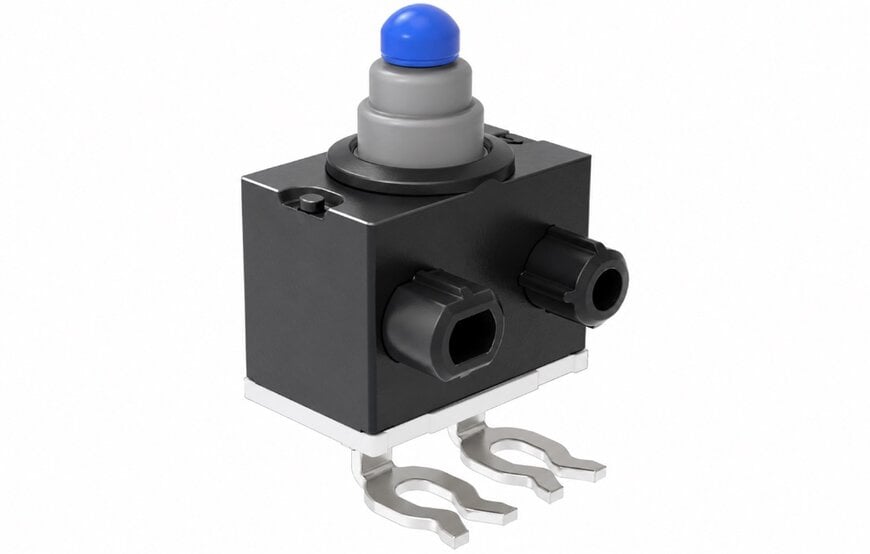
Alps Alpine has released the SPVQK Series, an electromechanical detector switch engineered for platforms utilizing 48V electrical architectures. The component targets mechanism detection in automotive systems, facilitating power efficiency and circuit simplification in high-voltage electric vehicles.
Application Areas in Automotive Systems
The SPVQK Series is deployed in automotive systems to monitor the physical status of mechanical components. Concrete technical use cases include physical state-detection for vehicle door latches, seat belt buckles, electric parking brakes, and steering column shifters. By accurately transmitting mechanism status to the central control unit, the switch ensures operational safety. Outside the automotive sector, the component is applicable in consumer electronics that require similar physical state detection under variable loads, such as smart locks and automated home appliances.
Transitioning to 48V Electrical Architectures
The automotive sector is shifting from conventional 12V systems to 48V setups to manage the increased power consumption of electrified vehicle features. This architectural transition mitigates power losses and supplies a stable current for high-demand components. Detector switches integrated into these environments must withstand elevated voltages to ensure process stability and maintain continuous, accurate telemetry regarding vehicle mechanisms.
Technical Specifications and Circuit Integration
Operating with a maximum rated voltage of 52V DC at 0.1 A, the SPVQK Series integrates directly into 48V networks without intermediate voltage conversion hardware. The switch features a proprietary contact structure that tolerates an inrush current of up to 3 A peak (C-load), a substantial increase from the 0.1 A peak capacity of the preceding SPVQ8 Series. This high inrush capability removes the requirement for external current-limiting chip resistors, thereby reducing the overall bill of materials and simplifying circuit design.
The component withstands overcurrents of 18 A for five minutes and maintains an initial contact resistance below 500 mΩ. Its physical dimensions (5.3 × 8.3 × 6.5 mm) mirror the previous generation to allow hardware integration with minimal structural modification. Furthermore, an IP6K7-compliant enclosure protects against dust and water ingress, supporting a rated operational lifespan of 300,000 cycles.
Additional Context
This section details technical specifications and competitive benchmarking not included in the original news release.
The ultra-compact automotive detector switch market is heavily standardized around 12V and 24V DC networks, with established components like the Omron D2HW and Panasonic Turquoise (ABS) Series serving as industry benchmarks for IP67-rated mechanism detection. These conventional subminiature switches typically support currents ranging from 0.1 A up to 2 A at 12V DC, which is sufficient for legacy architectures. However, when integrated into emerging 48V architectures, standard microswitches often require step-down converters, protective chip resistors, or intermediary relays to prevent contact welding from high inrush currents.
The primary differentiator of the SPVQK Series is its ability to directly switch up to 52V DC while absorbing a 3 A peak inrush current (C-load). While competing switches from Omron and Panasonic offer equivalent IP67 environmental sealing and match the 300,000-cycle mechanical lifespan, the SPVQK’s high-voltage contact structure addresses a specific engineering gap: it allows automotive designers to migrate door latches and column shifters to 48V networks without increasing the component footprint or adding external current-limiting hardware.
Edited by Aishwarya Mambet, Induportals Editor, with AI assistance.
www.alpsalpine.com
